
Hyperbaric Oxygen Therapy for Pre- and Post-Exercise Recovery in Pasadena
/You trained hard. You pushed your limits. And now your body needs to recover — fast, completely, and without cutting corners.
If you are serious about your performance, your recovery is just as important as the work you put in. That is where Hyperbaric Oxygen Therapy (HBOT) comes in. At HealthFit in Pasadena, athletes, weekend warriors, and active adults use HBOT to accelerate healing, reduce muscle soreness, and come back stronger — session after session.
Here is what you need to know about using HBOT for exercise recovery, and why more people across the greater Pasadena and San Gabriel Valley area are making it part of their regular training protocol.
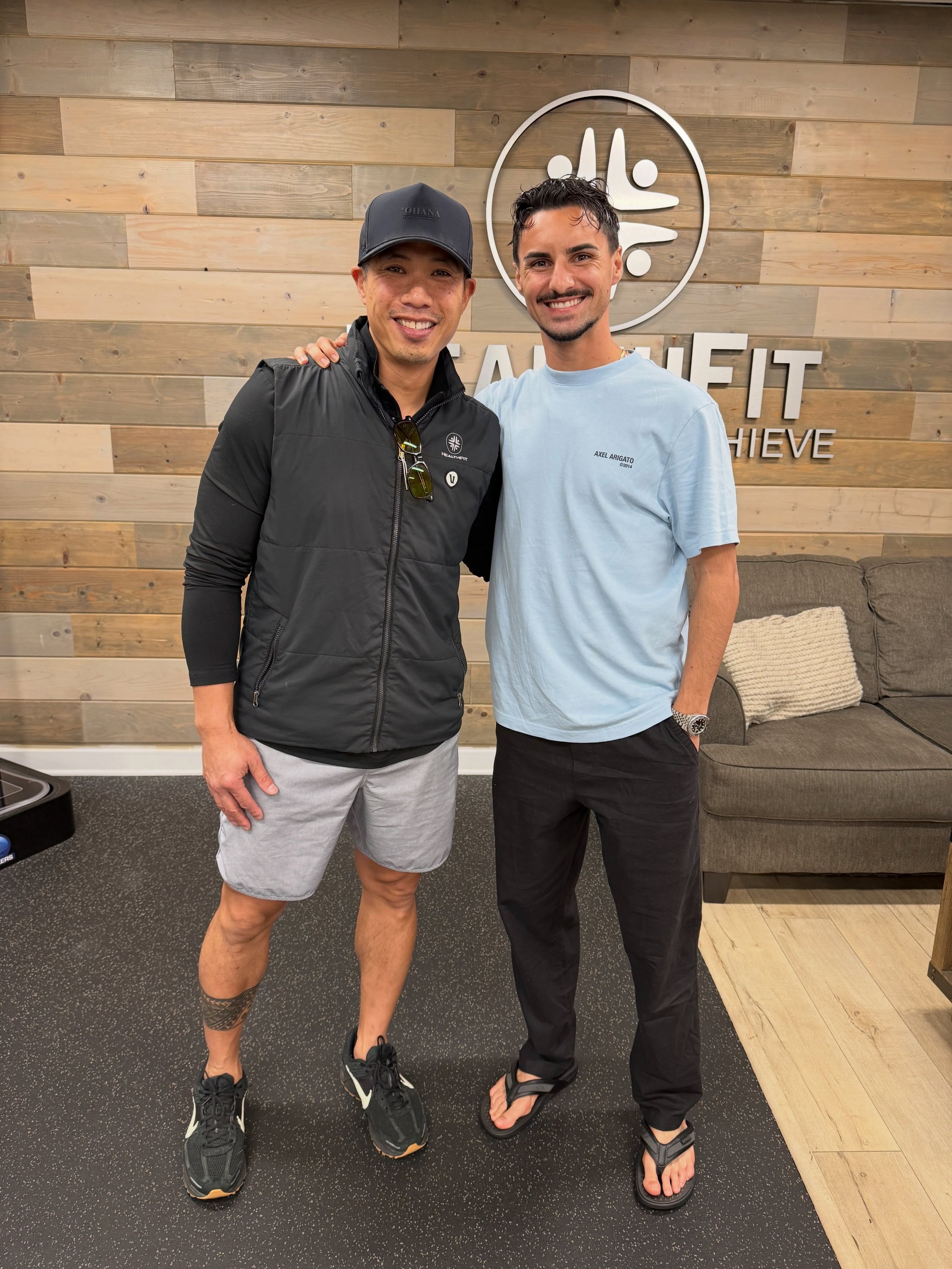
▶ VIDEO: Watch Dr. Jason Han explain how HBOT works for recovery at HealthFit Pasadena.
What Is HBOT and How Does It Support Exercise Recovery?
Hyperbaric Oxygen Therapy involves breathing concentrated oxygen inside a pressurized chamber. At HealthFit, we use a spacious triangle-shaped hyperbaric unit — designed to eliminate the claustrophobia common with traditional cylindrical chambers. Sessions typically run 60 minutes, and most patients find them deeply relaxing.
During a session, the increased atmospheric pressure allows your lungs to absorb far more oxygen than normal breathing allows. That oxygen-rich blood travels deeper into tissues that are inflamed, compressed, or oxygen-deprived — exactly the conditions created by intense training.
Here is what happens in your body during and after an HBOT session:
Inflammation is reduced — HBOT suppresses inflammatory cytokines, which means less soreness and swelling after hard workouts
Cellular repair accelerates — elevated oxygen fuels the mitochondria in damaged muscle fibers, speeding regeneration
New blood vessels form — a process called angiogenesis improves long-term circulation to previously injured tissue
Lactic acid clearance improves — oxygen helps neutralize the metabolic byproducts of high-intensity exercise
Growth factors and stem cells are stimulated — your body’s natural healing systems are amplified
How Does HBOT Help Before a Workout or Competition?
Most people think of HBOT as a recovery tool. But used strategically before a training session or competition, it can also prime your body for peak output.
Pre-exercise HBOT may support:
Higher baseline tissue oxygenation before you even begin warming up
Reduced residual soreness from previous training sessions
Improved mental clarity and focus — the brain is oxygen-hungry under pressure
Faster warm-up time as muscles receive oxygen-rich blood more readily
Athletes who use HBOT as part of a structured pre-competition protocol often report a greater sense of physical readiness and mental sharpness. At HealthFit, Dr. Jason Han has worked with competitive athletes at all levels — including as former head of rehabilitation for the Los Angeles Football Club (LAFC) — and has seen firsthand how oxygen-based recovery strategies change the performance curve.
How Many HBOT Sessions Do You Need for Exercise Recovery?
This is the question we hear most often — and the answer depends on your training load, goals, and any underlying tissue issues.
| Use Case | Recommended Sessions | Frequency |
|---|---|---|
| General workout recovery (soreness, fatigue) | 4–8 sessions | 2–3x per week |
| Acute sports injury (strain, sprain) | 8–12 sessions | Daily or 5x per week initially |
| Pre-competition priming protocol | 1–2 sessions pre-event | 1–2 days before competition |
| Ongoing performance maintenance | 1–2 sessions per week | Ongoing, as part of weekly training |
| Post-surgical sports injury recovery | 10–20 sessions minimum | Daily or near-daily early post-op |
One session is a start, not a solution. Just like a single physical therapy visit does not resolve a rotator cuff injury, a single HBOT session initiates the healing cascade — but the real gains come from completing a structured protocol. Our in-house HBOT coordinator will build a protocol specific to your training schedule and goals.
What Makes HealthFit’s HBOT Different in Pasadena?
There are very few clinics in the Pasadena and greater Los Angeles area offering hyperbaric oxygen therapy in an integrated clinical setting. Here is what sets HealthFit apart:
**Spacious, non-claustrophobic chamber** — HealthFit’s triangle-shaped unit offers significantly more interior room than standard cylindrical chambers. Patients can read, listen to music, sleep, meditate, or use their phone during sessions.
Integrated care model — HBOT at HealthFit is not a standalone service. It works alongside physical therapy, chiropractic, shockwave therapy, PEMF, VO₂ Max testing, and peptide protocols when appropriate.
1-on-1 clinical oversight — Dr. Jason Han, DPT, SCS and the HealthFit team monitor every patient’s response to treatment. You are never handed off to a tech.
HBOT coordinator on staff — HealthFit has a dedicated in-house HBOT coordinator who guides you from your first session through protocol completion.
Evidence-based protocols — session pressure levels and durations are set based on your specific condition, not a one-size-fits-all approach.
What You Need to Know: HBOT for Exercise Recovery in Pasadena
- HBOT accelerates muscle repair by delivering high-concentration oxygen to inflamed and damaged tissue.
- It can be used both before exercise (performance priming) and after (recovery acceleration).
- General recovery protocols typically run 4–8 sessions; injury or post-surgical protocols require 10–20+.
- A single session starts the process — completing the protocol delivers the lasting result.
- HealthFit’s HBOT coordinator will build a personalized protocol around your training schedule.
- HealthFit is the only integrated HBOT clinic in Pasadena with 1-on-1 clinical oversight.
Frequently Asked Questions About HBOT for Exercise Recovery
Is HBOT safe for athletes and regular gym-goers?
Yes. HBOT is non-invasive, non-pharmaceutical, and very well tolerated. The most common experience is a slight pressure sensation in the ears during pressurization — similar to being on an airplane. Most patients describe sessions as deeply relaxing.
How soon after a workout should I do an HBOT session?
For post-exercise recovery, the sooner the better — ideally within a few hours of training. However, sessions scheduled the same day or the day after a hard workout still provide meaningful recovery benefits. Your HealthFit coordinator will help you time sessions around your training schedule.
Will I feel better after just one session?
Some patients notice reduced soreness or improved energy after a single session. However, meaningful structural recovery — tissue repair, angiogenesis, inflammation reduction — accumulates over multiple sessions. Think of it the way you think about physical therapy: one appointment shows you the process, a full protocol delivers the outcome.
Can I use HBOT if I am not injured — just training hard?
Absolutely. Many of our Pasadena patients use HBOT as a regular performance maintenance tool, not just for injuries. Weekly or bi-weekly sessions help reduce baseline inflammation, speed recovery between training blocks, and support long-term tissue health.
How do I know if HBOT is right for me?
The best first step is a conversation with our HBOT coordinator, who will review your training background, any active injuries, and your recovery goals. There is no pressure to commit — just a real conversation about whether HBOT is the right fit for where you are right now.
Ready to Recover Smarter?
Your training deserves a recovery strategy built around precision — not guesswork. HealthFit’s in-house HBOT coordinator is ready to build a protocol around your schedule, your sport, and your goals.
Call us at (626) 365-1380 or book your HBOT consultation online. We are located at 145 Vista Ave, Suite 103, Pasadena, CA 91107
☞ Schedule Your HBOT Consultation — Call (626) 365-1380
or Book at healthfitinc.com/hbot-inquiry
About the Author
Dr. Jason Han, DPT, SCS is the founder and CEO of HealthFit Physical Therapy, Chiropractic & Wellness in Pasadena, CA. A former member of the U.S. National Taekwondo Team and former Head of Rehabilitation for the Los Angeles Football Club (LAFC), Dr. Jason brings elite sports performance expertise to everyday patients. He is also the author of “The Martial Arts of Listening.”