The Headaches That Actually Start in Your Neck (And Why You Keep Medicating the Wrong Thing)

The Headaches That Actually Start in Your Neck (And Why You Keep Medicating the Wrong Thing)

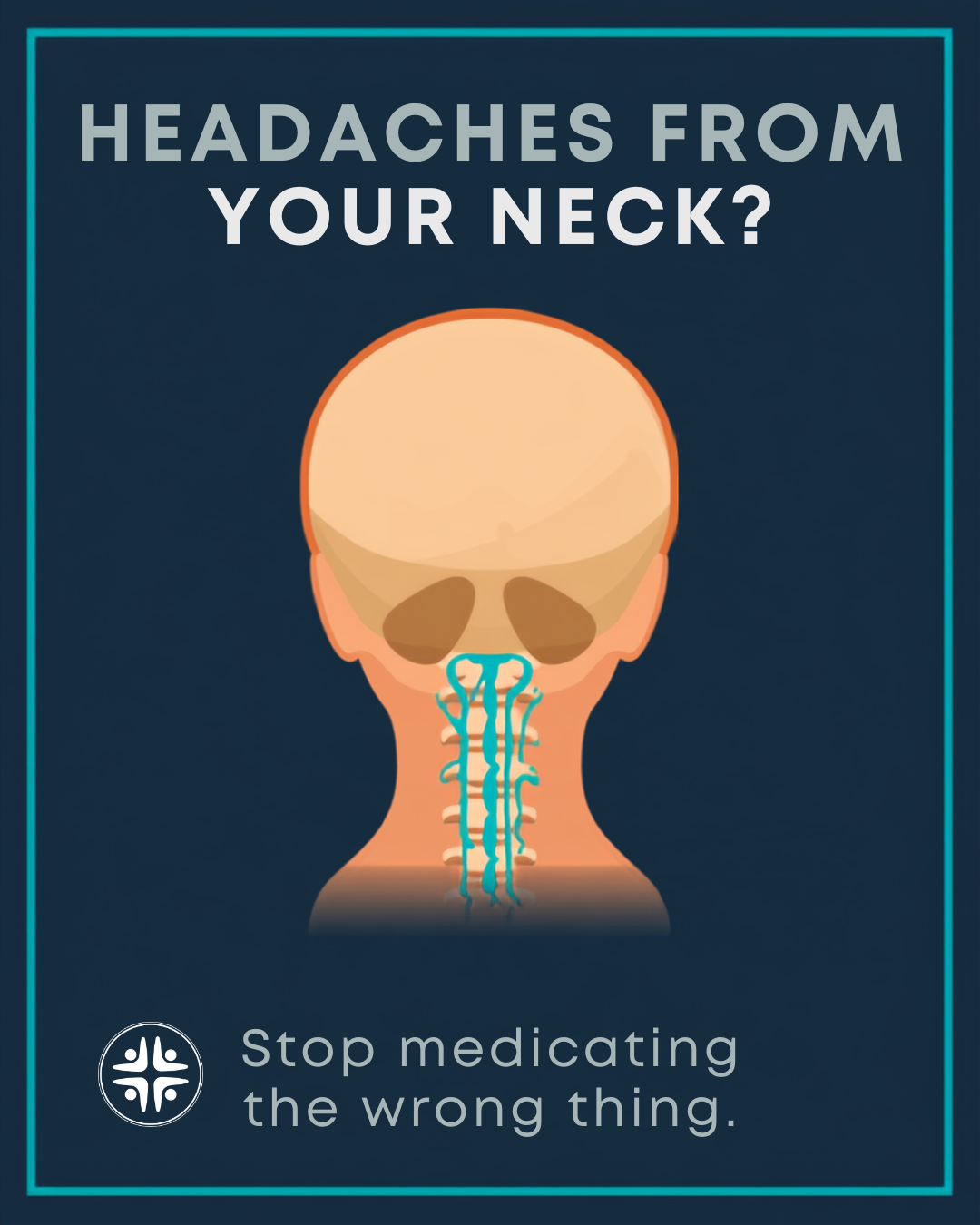
If your headache always starts at the base of your skull and rides up one side, it may not be starting in your head at all. Cervicogenic headaches are driven by the upper cervical spine — where neck nerves and head nerves share the same relay station in your brainstem. At HealthFit in Pasadena, we use the Source-Cause-Stack framework to trace the pain back to the upper neck joints, address the posture, thoracic stiffness, and shoulder imbalances driving it, and deploy Hands + Exercise + Regen from Day 1 to shut it off at the source.

Read More

Why Kids Are Getting Hurt in Summer Sports (and How to Protect Yours)

Why Kids Are Getting Hurt in Summer Sports (and How to Protect Yours)

Every summer, healthy kids get sidelined — not from contact, but from a sudden spike in training load that nobody was tracking. Young athletes who train more hours per week than their age are roughly 70% more likely to suffer serious overuse injuries, and about half of all youth sports injuries are preventable. At HealthFit in Pasadena, Dr. Jason Han — with over a decade in professional sports including the Pittsburgh Steelers, Cirque du Soleil, and LAFC — uses his Source-Cause-Stack framework to treat the whole picture, not just the sore spot, and helps parents protect their young athletes with movement screens, load management, and recovery plans that keep them playing the sport they love.

Read More

GLP-1 Was Found Inside Arthritic Joints. Here's What That Means for Your Knee.

GLP-1 Was Found Inside Arthritic Joints. Here's What That Means for Your Knee.

In 2026, researchers in Denmark found GLP-1 — the same hormone mimicked by Ozempic and Wegovy — sitting inside the synovial fluid of arthritic joints, along with the enzyme that regulates it. It was the first time this hormone had been documented inside the knee. Patients on these medications are reporting real pain relief, backed by the STEP 9 trial in the New England Journal of Medicine. But those same patients also lost nearly 14% of their body weight — and every pound translates to several pounds of force through the joint. Whether the relief comes from the drug acting on the joint or from the weight coming off is still being worked out. At HealthFit in Pasadena, Dr. Jason Han treats knee arthritis through the Source-Cause-Stack — hands-on care, targeted loading, and regenerative therapy with EMTT, focused shockwave, and radial pressure wave from Day 1 — because waiting for a magic shot isn't a plan. Your knee is sending you a message. The source is the tissue. The cause is upstream. Treat both, together, from the start.

Read More

Why Some Tendons Won't Heal — and What New Lab Data on EMTT Reveals

Why Some Tendons Won't Heal — and What New Lab Data on EMTT Reveals

When a tendon gets damaged and won't bounce back, the problem may not be your effort — it may be senescent cells sitting inside the tissue, leaking inflammation and blocking repair. A 2025 study in the International Journal of Molecular Sciences exposed real human tendon cells to EMTT and found that the senescent-cell marker dropped significantly while active repair-cell markers rose, collagen production increased, and cell migration resumed. The researchers described it as a "senolytic-like" effect — the tissue shifted back toward a repair state. At HealthFit in Pasadena, EMTT is the foundation layer of the regenerative stack, paired with focused shockwave and radial pressure wave alongside hands-on therapy and targeted exercise from Day 1. The science is starting to explain what we've watched unfold in clinic for years: cells have to be awake and communicating before anything else can do its best work.

Read More

Pickleball Knee: The Lunge Pattern Your Body Was Never Trained For

Pickleball Knee: The Lunge Pattern Your Body Was Never Trained For

If you've been told you need knee surgery because of pickleball, pause. A New England Journal of Medicine sham-surgery trial showed arthroscopic meniscectomy performed no better than fake surgery for degenerative tears — and 31% of pain-free adults in their fifties already have a meniscus tear on imaging. The tear was likely there long before pickleball. What pickleball exposed was a lunge pattern your body was never trained for — weak hip stabilizers, limited ankle dorsiflexion, poor deceleration mechanics, and a knee absorbing forces it was never designed to handle alone. At HealthFit in Pasadena, Dr. Jason Han treats pickleball knee through the full kinetic chain while using EMTT, focused shockwave, and radial pressure wave to address the degenerated tissue from Day 1. Before you go invasive, let someone look at the whole picture.

Read More

Inside a HealthFit Pickleball Assessment: What Real Treatment Looks Like

Inside a HealthFit Pickleball Assessment: What Real Treatment Looks Like

When most pickleball players walk into a clinic with an injury, they get ten minutes, an imaging order, and a treatment plan based on the scan. At HealthFit in Pasadena, they get a real conversation about their history, a full kinetic chain evaluation from neck to feet, 3D movement analysis that shows exactly where the chain is breaking down, and a tissue-level assessment of what's actually degenerated. The research is clear — 80% of pain-free 50-year-olds have disc degeneration on MRI, 23% have a rotator cuff tear, and 31% have a meniscus tear. Imaging shows what's there. It doesn't show what's causing the pain. HealthFit builds every plan around the Source-Cause-Stack framework — hands-on care, targeted exercise, and regenerative therapy with EMTT, focused shockwave, and radial pressure wave, all deployed in parallel from Day 1. Treat the player. Not just the spot.

Read More

Pickleball Shoulder: The Overhead Smash Injury Nobody Treats Right

Pickleball Shoulder: The Overhead Smash Injury Nobody Treats Right

If your shoulder started hurting after a pickleball smash, there's a real chance the rotator cuff was already torn before you ever picked up a paddle. Research shows nearly one in four pain-free adults over fifty has a rotator cuff tear on imaging — pickleball just exposed it. Every overhead smash, serve, and backhand drive loads a shoulder that was already on borrowed time, especially when scapular control has declined, the thoracic spine is stiff from decades of desk work, and the trunk can't transfer force the way it should. At HealthFit in Pasadena, Dr. Jason Han treats pickleball shoulder through the full kinetic chain — shoulder blade mechanics, thoracic mobility, cervical function, core stability, and lower-body power transfer — while using EMTT, focused shockwave, and radial pressure wave to heal the degenerated tendon tissue and even disperse calcific deposits from Day 1. Your shoulder didn't break the day it started hurting. It broke down over years. Treat the tissue and the chain together, from the start.

Read More

Pickleball Elbow Isn't Tennis Elbow — Why Your Treatment Isn't Working

Pickleball Elbow Isn't Tennis Elbow — Why Your Treatment Isn't Working

If your doctor called your pickleball elbow "tennis elbow," the label is half right — and the half that's wrong is exactly why your treatment isn't working. Pickleball paddles transmit more vibration than strung racquets, the wrist mechanics are shorter and more repetitive, and the average player's tendon already has decades of wear. That's not inflammation — it's degeneration. And the most common treatment, cortisone, has been shown to produce worse outcomes at twelve months than doing nothing at all. At HealthFit in Pasadena, Dr. Jason Han treats pickleball elbow through the full kinetic chain — grip strength, scapular control, cervical and thoracic mobility, hip mechanics — while using EMTT, focused shockwave, and radial pressure wave to stimulate real collagen remodeling in the degenerated tendon from Day 1. The label matters because the label drives the treatment. Treat the right injury, the right way, from the start.

Read More

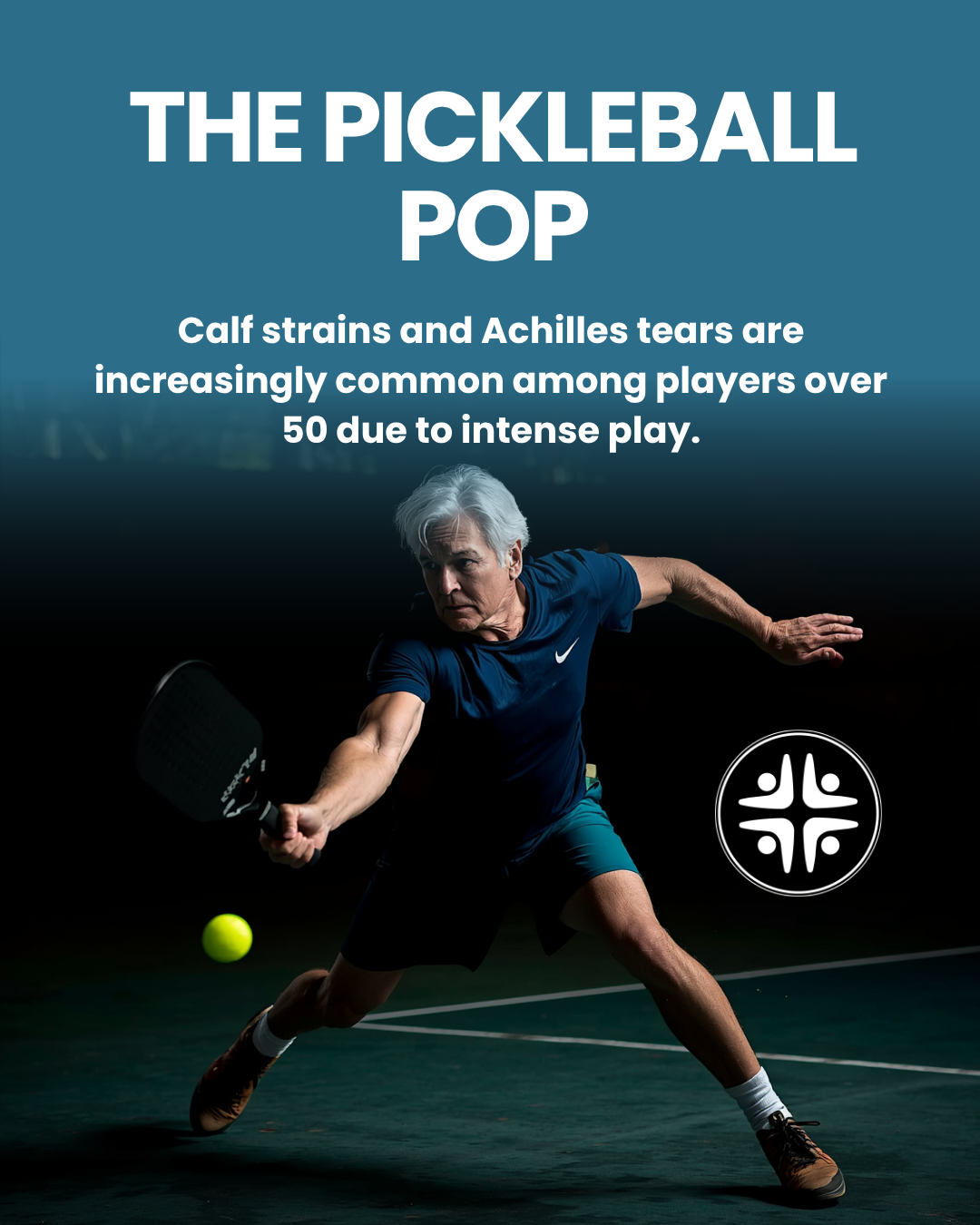
The Pickleball Pop: Why Calf Strains and Achilles Tears Are Surging

The Pickleball Pop: Why Calf Strains and Achilles Tears Are Surging

That pop on the pickleball court wasn't bad luck — it was the end of a process that had been building for years. Research shows over 90% of spontaneously ruptured tendons already had pre-existing degenerative changes before they snapped. Pickleball just exposed the structural threshold with hundreds of explosive push-offs per match on tissue that was already wearing down. At HealthFit in Pasadena, Dr. Jason Han treats the pickleball pop at every layer — the degenerated Achilles or calf tissue with EMTT, focused shockwave, and radial pressure wave, and the upstream mechanics that overloaded it in the first place: limited ankle dorsiflexion, restricted hip extension, weak glutes, and poor deceleration patterns. Rest calms the pain. Treating the source and the cause together from Day 1 is what actually keeps the pop from coming back.

Read More

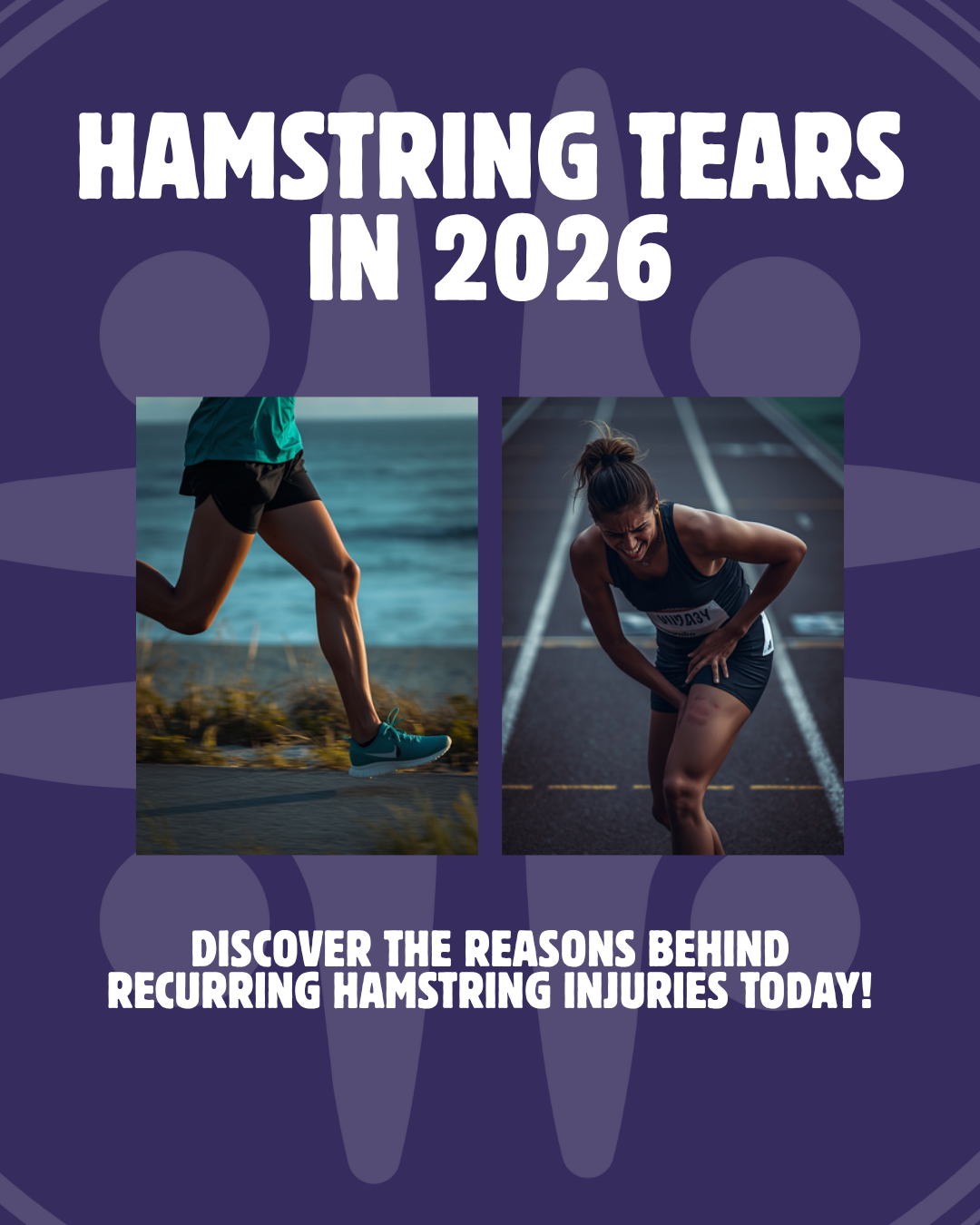
Hamstring Tears Are Spiking in 2026 — Here's Why, and What to Actually Do About It

Hamstring Tears Are Spiking in 2026 — Here's Why, and What to Actually Do About It

Hamstring tears are surging in 2026 — from elite sprinters to weekend runners and pickleball players coming back too fast. And nearly one in three come back within a year, often worse than the first. The reason? Most rehab treats the sore spot and stops there. At HealthFit in Pasadena, Dr. Jason Han — former head of rehab for LAFC — uses a pro-sports approach: no waiting, no resting and hoping, and no skipping the kinetic chain. The tear is the source, but the cause is almost always upstream — a stiff lower back, glutes that don't fire, and eccentric strength that ran out. Using the healing stack of hands-on therapy, targeted eccentric loading, and regenerative therapy with EMTT, focused shockwave, and radial pressure wave from Day 1, the goal isn't just stopping the pain. It's rebuilding the chain so the hamstring never gets hung out to dry again.

Read More