Rotator Cuff Pain That Won't Quit? Why the Exercises Alone Were Never Going to Heal It

Rotator Cuff Pain That Won't Quit? Why the Exercises Alone Were Never Going to Heal It

If your rotator cuff has been nagging for months through the stretches, the resistance bands, and the rest, the problem isn't effort — it's approach. Exercise builds strength around the problem but doesn't repair the damaged tendon at the center of it. That's the gap that leaves shoulders circling at "almost better" for years. At HealthFit in Pasadena, Dr. Jason Han treats the Source — the degenerated tendon tissue — and the Cause — the stiff mid-back, the poorly tracking shoulder blade, the upstream mechanics overloading the cuff — together from Day 1. A randomized controlled trial of 86 patients with rotator cuff tendinopathy found that combining shockwave with EMTT produced significantly greater pain reduction and better function than shockwave alone. Two tools, working together, outperformed one. That's the case for the integrated stack — and it starts from the first visit, not as a last resort.

Read More
Focused vs. Radial Shockwave: Why One Machine Isn't Enough

Focused vs. Radial Shockwave: Why One Machine Isn't Enough

Most people who say shockwave therapy "didn't work" never learned there are two kinds — and they only got one. Focused shockwave delivers concentrated acoustic energy deep into damaged tissue like arthritic joints, bone stress injuries, and tendon insertions. Radial pressure wave spreads energy across the surface to release the tight muscles, compensating structures, and overloaded soft tissue that caused the injury in the first place. At HealthFit in Pasadena, we use the Storz Medical system with both machines running together from Day 1 — because treating the source without addressing the cause, or vice versa, leaves you with half a recovery. It's part of our Source-Cause-Stack framework: heal the damaged tissue, fix the movement pattern feeding it, and integrate regenerative therapy into the plan from the start — not as a last resort.

Read More
Why Is My Neck Always Stiff? The Source-Cause Fix Most People Miss

Why Is My Neck Always Stiff? The Source-Cause Fix Most People Miss

If you're rubbing the same spot on your neck every day and the stiffness keeps coming back, you're treating the symptom — not the cause. At HealthFit in Pasadena, Dr. Jason Han uses a Source-Cause framework to trace chronic neck stiffness back to where it actually starts: weak deep neck flexors, a locked-up thoracic spine, rounded shoulder blades, and sometimes even jaw tension or nighttime teeth grinding. When those "spokes" are out of alignment, your neck — the hub — takes all the load. The fix isn't more massage on the back of your neck. It's waking up the stabilizers in front, restoring mobility to your upper back, and when real degeneration is part of the picture, integrating regenerative therapy from Day 1. Source and cause, treated together — so your neck can finally stop doing a job it was never built for.

Read More

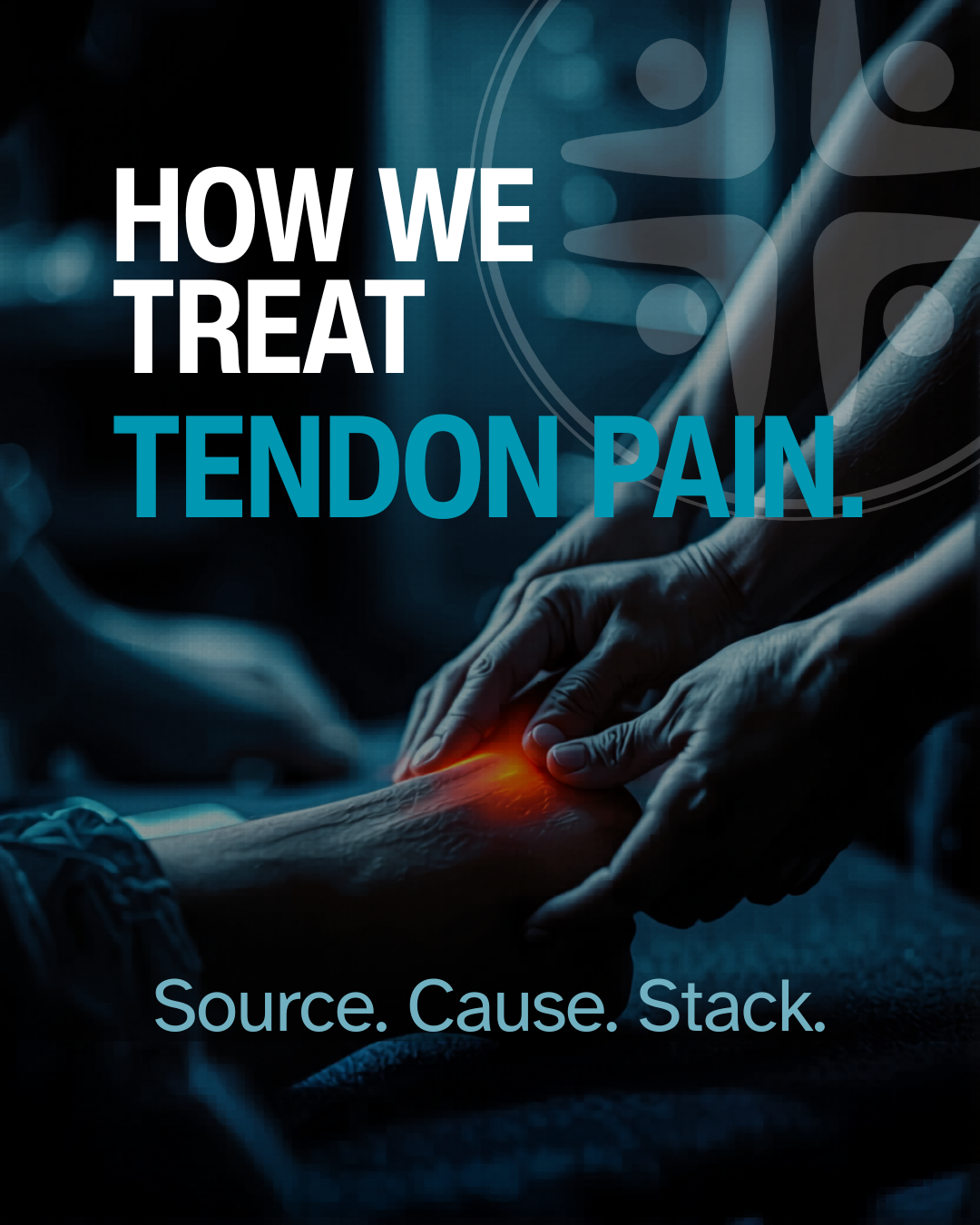
How We Treat Tendon Pain at HealthFit: The Integrated Approach

How We Treat Tendon Pain at HealthFit: The Integrated Approach

Most tendon pain cycles back because rehab was only built to treat half of it — the movement patterns upstream, but never the damaged tissue itself. At HealthFit Physical Therapy & Chiropractic in Pasadena, Dr. Jason Han uses what he calls the Source-Cause-Stack framework: hands-on care to diagnose and treat the kinetic chain, targeted exercise to correct the mechanical overload, and regenerative therapy — EMTT to reset the cellular environment followed by focused shockwave on the damaged tendon and radial pressure wave on the surrounding soft tissue — all running in parallel from Day 1, not sequentially after something fails. That single change in sequencing is why patients who plateaued elsewhere finally get unstuck. Here's exactly how the integrated approach works for Achilles, patellar, rotator cuff, and every other tendon injury we treat.

Read More

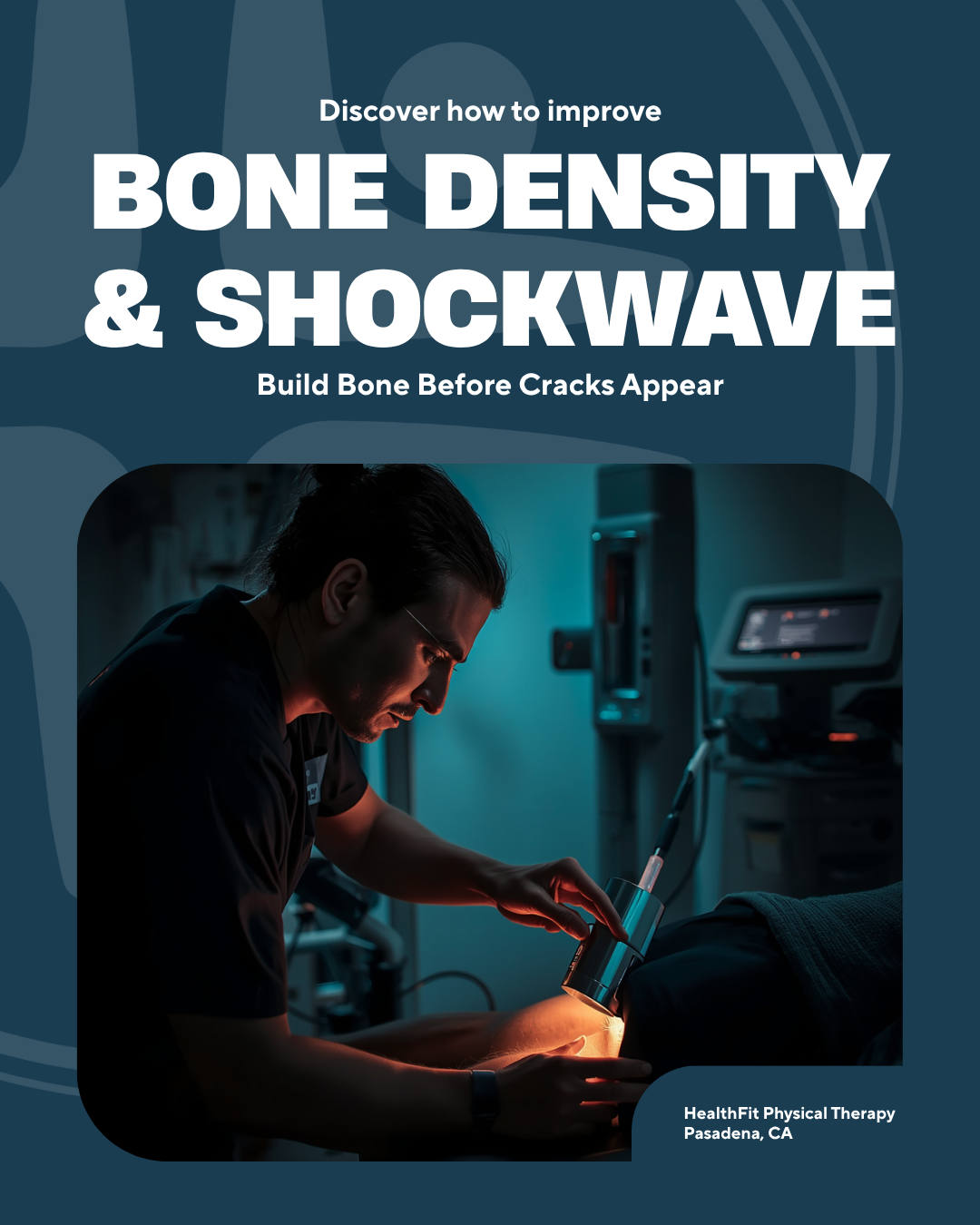
Shockwave Therapy & EMTT for Bone Density: What the Emerging Research Shows

Shockwave Therapy & EMTT for Bone Density: What the Emerging Research Shows

After age 40, most people lose about 1% of bone mass per year — and for postmenopausal women, that jumps to 2–3%. Calcium and vitamin D matter, but they don't address the root problem: dormant bone-building cells that have stopped receiving a strong enough signal to rebuild. Emerging research on focused shockwave therapy shows it can deliver a precise mechanical stimulus that reactivates osteoblasts and improves both bone mineral density and structural strength. When combined with EMTT — which primes the cellular environment and clears damaged cells before shockwave fires the rebuild signal — the regenerative stack targets bone health from two angles at once. Dr. Jason Han at HealthFit Physical Therapy in Pasadena walks through what the science shows, how the tendon-bone connection gets missed, and what a comprehensive bone health approach actually looks like.

Read More

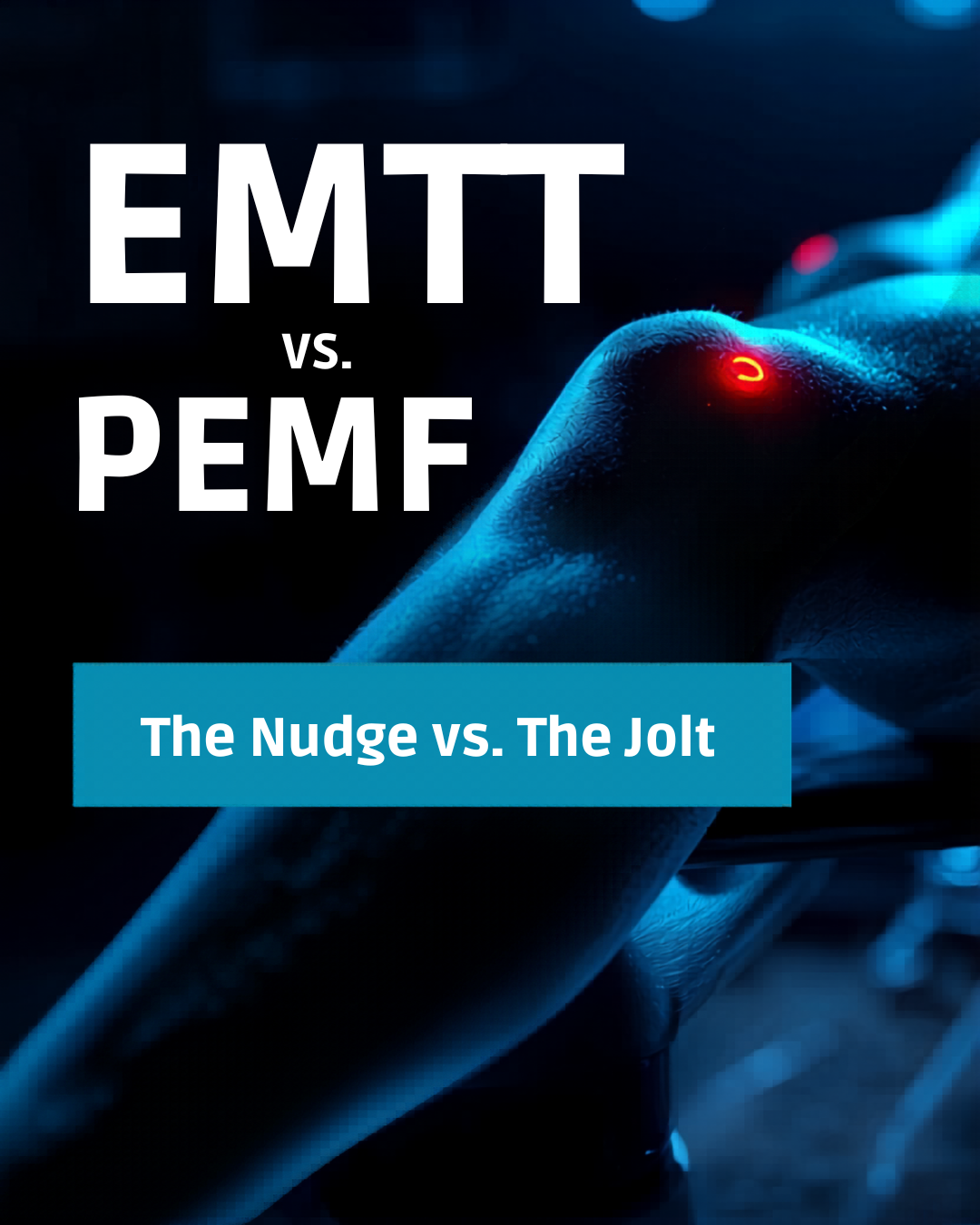
EMTT vs. PEMF: Why Your Mat Isn't Healing Your Injury

EMTT vs. PEMF: Why Your Mat Isn't Healing Your Injury

PEMF mats and clinical EMTT both use pulsed magnetic fields — but that's where the similarity ends. PEMF operates in the low millitesla range at the surface level, supporting general recovery the way good sleep and hydration do. EMTT pulses up to 3 tesla, penetrating inches deep into tendon, ligament, and bone to re-open ion channels, reset chronic inflammation, and restart the cellular repair process that's been stalled. One is the nudge. The other is the jolt. Dr. Jason Han at HealthFit Physical Therapy in Pasadena breaks down why the intensity gap matters, what EMTT actually does inside your cells, and why the tool only works when it lives inside a complete system that treats both the source and the cause of your injury.

Read More

When Cortisone Stops Working: What to Do Next

When Cortisone Stops Working: What to Do Next

The first cortisone shot worked. The second helped less. The third barely did anything. That's not a coincidence — repeat cortisone injections suppress the same inflammatory healing cascade your tissue needs to actually repair. Cortisone quiets the alarm, but it never fixes what's broken. At HealthFit Physical Therapy & Chiropractic in Pasadena, Dr. Jason Han uses what he calls the Regenerative Stack — EMTT to prime the tissue at a cellular level, focused shockwave to drive a precision healing signal into the damaged source, and radial pressure wave to address the surrounding soft tissue system feeding the injury — all while correcting the movement patterns that caused the problem. Here's why cortisone has a ceiling, and what comes next when you've hit it.

Read More

Storz Medical vs. StemWave vs. SoftWave: Which Shockwave Technology Is Right for You?

Storz Medical vs. StemWave vs. SoftWave: Which Shockwave Technology Is Right for You?

Not all shockwave therapy is the same. Storz Medical uses electromagnetic focused shockwave with a 2–3mm focal zone for laser-like precision. StemWave uses electrohydraulic technology with a broader focus. SoftWave spreads energy across the widest area with its parallel wave design. Each has clinical value — but the device is only half the equation. At HealthFit Physical Therapy in Pasadena, Dr. Jason Han sequences EMTT, focused shockwave, and radial pressure wave in a single session to address both the source of the injury and the cause behind it. Here's how the technologies compare and why clinical reasoning matters more than the machine.

Read More

What to Do Between Shockwave Therapy Sessions: The Recovery Protocol That Actually Heals

What to Do Between Shockwave Therapy Sessions: The Recovery Protocol That Actually Heals

Shockwave therapy has a 70–80% success rate for conditions like plantar fasciitis and tendinopathy — but only when the full recovery protocol is followed. What most patients don't realize is that the real healing happens between sessions, not during them. Icing, NSAIDs, and skipping appointments can cut your results in half by shutting down the very inflammatory cascade the treatment was designed to trigger. Dr. Jason Han at HealthFit Physical Therapy in Pasadena breaks down the exact between-session protocol — from active rest and controlled movement to hydration, sleep, nutrition, and fixing the upstream cause that created the injury in the first place.

Read More

EMTT vs Electrical Stimulation: The Fundamental Difference in How Healing Works

EMTT vs Electrical Stimulation: The Fundamental Difference in How Healing Works

Most people assume EMTT is just a newer version of electrical stimulation. It's not — they're in completely different categories. TENS and EMS send electrical current through surface electrodes to manage pain signals and activate muscles, but the current never reaches your tendons, ligaments, joints, or bone. EMTT uses high-frequency magnetic fields that penetrate deep into tissue at the cellular level — activating dormant repair genes, clearing senescent "zombie cells" that block healing, and triggering new blood vessel formation. One manages how you feel today. The other changes what's happening in your tissue. Here's why that distinction matters for anyone stuck in the chronic injury cycle.

Read More