
Why Kids Are Getting Hurt in Summer Sports (and How to Protect Yours)
/Every summer, I watch healthy kids get hurt playing the sport they love. Not from a bad fall. Not from contact. From something quieter and far more preventable — a jump in workload that nobody was watching.
If your child plays a sport, this is the season it happens. The camps stack up. The club team travels tournament to tournament. The one or two practices a week during the school year suddenly become five or six days in a row. And the parents doing everything “right” are often the ones most surprised when their kid ends up on the sideline.
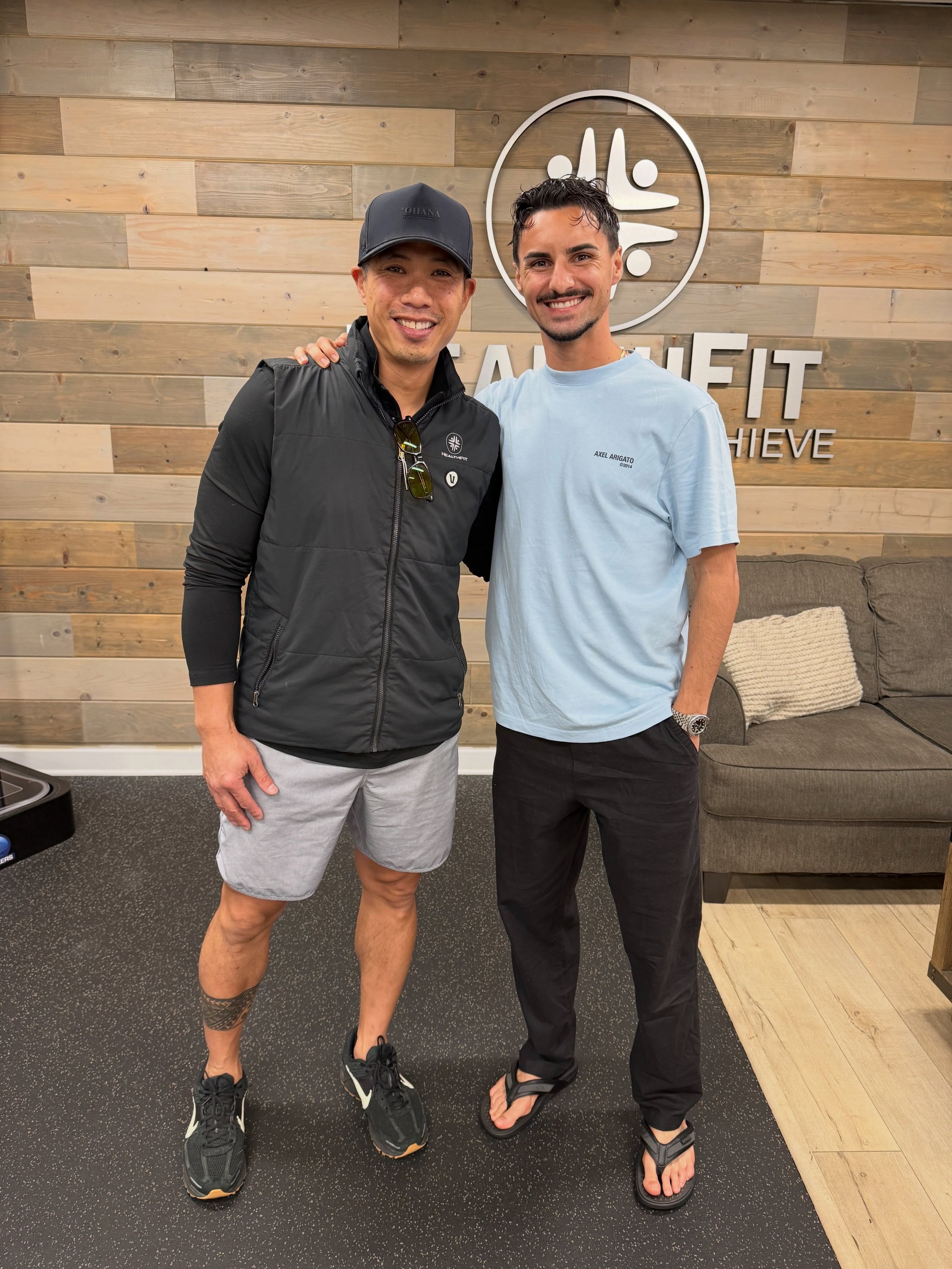
I’m Dr. Jason Han — doctor of physical therapy, sports rehab specialist, and founder of HealthFit Physical Therapy & Chiropractic in Pasadena. I’ve also spent over ten years inside professional sports, working with the Pittsburgh Steelers, Cirque du Soleil, and Los Angeles Football Club. That experience gives you a ten-thousand-foot view: you stop panicking every time an athlete gets sore, but you never wave it off either. You put it in perspective. And here’s the number every sports parent should sit with — young athletes who train more hours a week than their age are about 70% more likely to suffer a serious overuse injury. Not a bruise. The kind that costs a season. On top of that, roughly half of all youth sports injuries are overuse injuries — which means they’re preventable.
This got personal for me this week. My sister called about my niece, a serious high school basketball player deep into a summer of club tournaments. So let me walk you through exactly what’s happening to these kids — and how to protect yours.
Hard Work Isn’t the Problem. The Jump Is.
Let’s kill a myth first. Hard work isn’t what injures your kid. The sudden jump in workload is.
Take my daughter. During the school year, she practices basketball once, maybe twice a week. Then she did a summer camp — six days in a row, five hours a day. Do the math: she went from about two hours a week to thirty in a single jump. Her body didn’t get fifteen times tougher overnight. The tissue that was ready for last week’s load simply isn’t ready for this week’s.
Here’s the guideline the research actually gives us: increase training load by 10 to 20 percent at a time — not 1,500 percent in one week. That gap, between what the body was built for and what you suddenly ask of it, is exactly where injuries live. And summer, with its camps and back-to-back tournaments, is one giant spike.
Load Isn’t Just Hours — It’s the Role
But hours only tell half the story. You also have to count the role.
My niece is a good example. On her high school team, she’s a starter, or the sixth or seventh player in the rotation. Then summer club ball begins — and suddenly she’s one of the main players. She’s shooting more, on the floor more, carrying more of the offense. There are college scouts in the stands, so the intensity climbs even higher.
Same kid. Completely different load. She isn’t just adding tournament hours — she’s adding intensity, minutes, and pressure, all stacked on top of each other in a compressed window. That’s the part parents miss. You can’t just count practices. You have to count how hard, how often, and in what role your athlete is actually playing.
Why Ice Won’t Fix It: Source, Cause, Stack
When my niece’s Achilles started barking this summer, the instinct was the usual one: ice it, rest it, wait for it to calm down. Ice has its place. But ice only talks to the Source — the sore spot itself. It never touches the Cause.
At HealthFit, we look at every injury through a framework I call Source, Cause, Stack:
Source — where it hurts: the Achilles, the knee, the shoulder.
Cause — what’s driving it from upstream: the spike in load, the movement mechanics, the miles and jumps piling up.
Stack — the integrated plan we deploy to fix both at once.
Here’s the part parents rarely hear. All those jumps and hours add up, even in a young body. That repetitive pounding creates real wear over time. It’s why you see teenagers with jumper’s knee and patellar tendon pain — that’s not weakness, it’s chronic tissue change starting younger than most people expect. Icing the Source will never resolve a problem that’s coming from the Cause.
The Stack is the actual plan: hands-on physical therapy, a movement screen to see where the body really is, and — when it’s appropriate — non-invasive therapies that support the tissue itself. All working together from the start, not one after the other. We don’t just chase the sore spot; we treat the cause and support the source together. Most importantly, it gives a parent real information, so you’re not making decisions blind.
Recovery Is the Other Half of the Work
Here’s the part nobody wants to hear: the more your kid plays, the more they have to spend on recovery. It isn’t optional. It’s the other half of the work. And those habits they built when they were hurt — the activation, the stretches, the cooldown — matter more when they’re healthy, not less.
This is how the pros actually operate. I’ll be honest: not every professional athlete does exactly what they’re supposed to. But in a pro organization, it’s the staff’s job to protect that athlete. These are multimillion-dollar bodies, and someone monitors their load, recovery, and sleep every single day. That’s the real difference between a pro and a club kid. The pro has a whole team guarding their body. Your kid has a calendar that says “tournament at eight.” So this summer, you’re the staff. You’re the one who guards the recovery.
Weigh the Upside and the Downside
There’s one more thing summer piles on that the regular season doesn’t: pressure. Scouts are watching. Coaches are watching. Other parents are watching. The temptation is to push through everything because this feels like the moment. But pressure doesn’t change physiology — your kid’s tendons don’t care who’s in the stands.
Here’s how I actually talked to my niece. I don’t try to scare people; I lay out the repercussions. Every choice has an upside and a downside. I told her honestly: this probably won’t happen — but it could. If you keep loading a cranky Achilles, you risk a tear. And in basketball, an Achilles rupture is about as bad as it gets. It’s in the same conversation as an ACL — the kind of injury that changes a season, sometimes a career. That’s not a decision about now, or lunch, or “I’ll do it later.” It’s a decision about how much you value your body. Because in sport, your body is your engine — everything runs on it. When you frame it that way, respecting recovery stops sounding like nagging and starts sounding like strategy.
How to Protect Your Young Athlete This Summer
You don’t have to pull your kid out of camp or quit the club team. You just have to respect the load. Here’s where to start:
Protect the ramp. Build training hours up gradually instead of all at once, and guard at least one full rest day every week.
Make recovery part of the plan, not a reward. Activation before, cooldown after, and sleep treated like it’s training — because it is.
Address old or nagging injuries before you load them. If your athlete has pain that keeps coming back, get it screened before the season stacks more on top of it.
Get the full picture. A movement screen shows you where your athlete’s body actually is — so you’re deciding with information, not guessing in the dark.
At HealthFit in Pasadena, we’ll run that screen, find the weak link before it finds your kid, and build a plan that keeps them playing the sport they love. Because healthy kids shouldn’t be breaking down every summer — and with a little respect for the body, they don’t have to.
Worried about your young athlete’s summer load? Submit an inquiry here or call us at 626-365-1380 to book a movement screen before the next tournament.
The information in this article is intended for general guidance only and should never be considered a substitute for professional medical advice, diagnosis, or treatment. Always seek the advice of your physician, medical provider, or physical therapist with any questions regarding a medical condition.