Pickleball Knee: The Lunge Pattern Your Body Was Never Trained For

Pickleball Knee: The Lunge Pattern Your Body Was Never Trained For

If you've been told you need knee surgery because of pickleball, pause. A New England Journal of Medicine sham-surgery trial showed arthroscopic meniscectomy performed no better than fake surgery for degenerative tears — and 31% of pain-free adults in their fifties already have a meniscus tear on imaging. The tear was likely there long before pickleball. What pickleball exposed was a lunge pattern your body was never trained for — weak hip stabilizers, limited ankle dorsiflexion, poor deceleration mechanics, and a knee absorbing forces it was never designed to handle alone. At HealthFit in Pasadena, Dr. Jason Han treats pickleball knee through the full kinetic chain while using EMTT, focused shockwave, and radial pressure wave to address the degenerated tissue from Day 1. Before you go invasive, let someone look at the whole picture.

Read More

Inside a HealthFit Pickleball Assessment: What Real Treatment Looks Like

Inside a HealthFit Pickleball Assessment: What Real Treatment Looks Like

When most pickleball players walk into a clinic with an injury, they get ten minutes, an imaging order, and a treatment plan based on the scan. At HealthFit in Pasadena, they get a real conversation about their history, a full kinetic chain evaluation from neck to feet, 3D movement analysis that shows exactly where the chain is breaking down, and a tissue-level assessment of what's actually degenerated. The research is clear — 80% of pain-free 50-year-olds have disc degeneration on MRI, 23% have a rotator cuff tear, and 31% have a meniscus tear. Imaging shows what's there. It doesn't show what's causing the pain. HealthFit builds every plan around the Source-Cause-Stack framework — hands-on care, targeted exercise, and regenerative therapy with EMTT, focused shockwave, and radial pressure wave, all deployed in parallel from Day 1. Treat the player. Not just the spot.

Read More

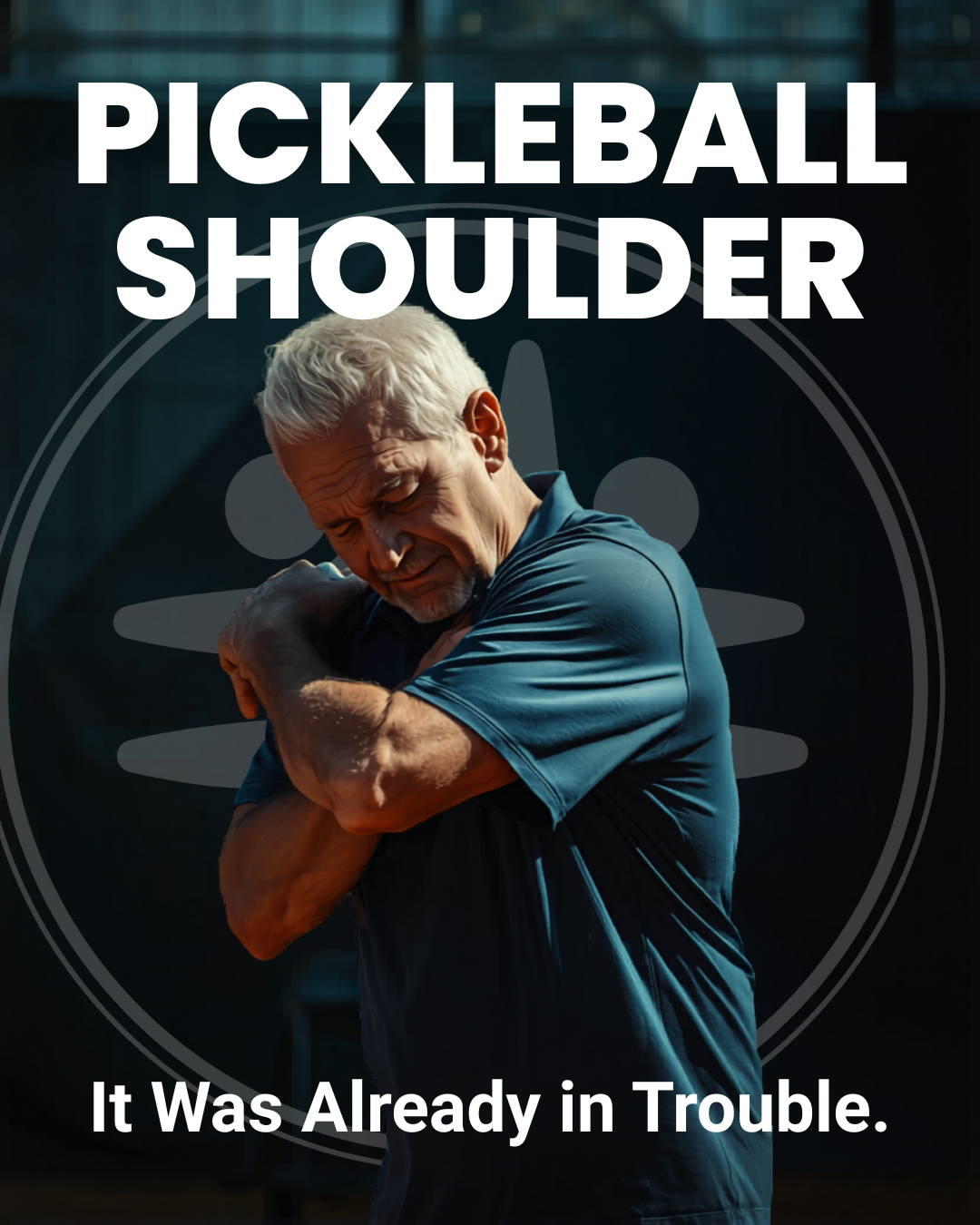
Pickleball Shoulder: The Overhead Smash Injury Nobody Treats Right

Pickleball Shoulder: The Overhead Smash Injury Nobody Treats Right

If your shoulder started hurting after a pickleball smash, there's a real chance the rotator cuff was already torn before you ever picked up a paddle. Research shows nearly one in four pain-free adults over fifty has a rotator cuff tear on imaging — pickleball just exposed it. Every overhead smash, serve, and backhand drive loads a shoulder that was already on borrowed time, especially when scapular control has declined, the thoracic spine is stiff from decades of desk work, and the trunk can't transfer force the way it should. At HealthFit in Pasadena, Dr. Jason Han treats pickleball shoulder through the full kinetic chain — shoulder blade mechanics, thoracic mobility, cervical function, core stability, and lower-body power transfer — while using EMTT, focused shockwave, and radial pressure wave to heal the degenerated tendon tissue and even disperse calcific deposits from Day 1. Your shoulder didn't break the day it started hurting. It broke down over years. Treat the tissue and the chain together, from the start.

Read More

The Pickleball Pop: Why Calf Strains and Achilles Tears Are Surging

The Pickleball Pop: Why Calf Strains and Achilles Tears Are Surging

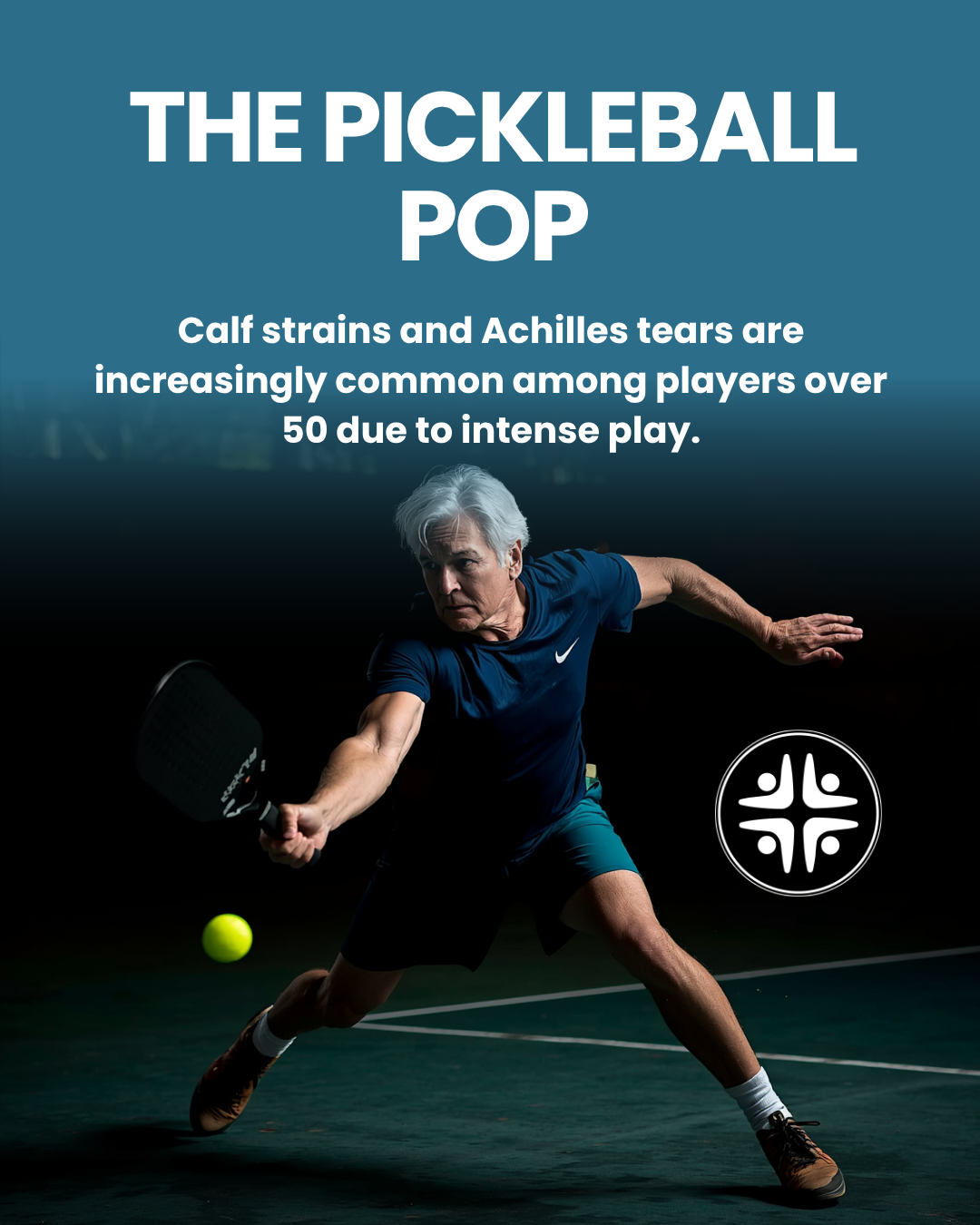
That pop on the pickleball court wasn't bad luck — it was the end of a process that had been building for years. Research shows over 90% of spontaneously ruptured tendons already had pre-existing degenerative changes before they snapped. Pickleball just exposed the structural threshold with hundreds of explosive push-offs per match on tissue that was already wearing down. At HealthFit in Pasadena, Dr. Jason Han treats the pickleball pop at every layer — the degenerated Achilles or calf tissue with EMTT, focused shockwave, and radial pressure wave, and the upstream mechanics that overloaded it in the first place: limited ankle dorsiflexion, restricted hip extension, weak glutes, and poor deceleration patterns. Rest calms the pain. Treating the source and the cause together from Day 1 is what actually keeps the pop from coming back.

Read More

Pickleball Back Pain: Why Rotation Is Wrecking the Lumbar Spines of Every Player Over Fifty

Pickleball Back Pain: Why Rotation Is Wrecking the Lumbar Spines of Every Player Over Fifty

If your back keeps going out on the pickleball court, the problem isn't your back — it's what your body isn't doing above and below it. Your lumbar spine was built for stability, not rotation. When stiff hips and a locked-up thoracic spine can't rotate, every forehand, backhand, and dink dumps rotational force into the one segment that was never designed for it. At HealthFit in Pasadena, Dr. Jason Han uses the Source-Cause-Stack framework to treat pickleball back pain at every layer — restoring hip rotation, thoracic mobility, and glute function while using EMTT, focused shockwave, and radial pressure wave to heal the facet joints, discs, and paraspinal tissue that years of compensated rotation have broken down. You don't have a back problem. You have a rotation problem. Treat the right one, the right way, from Day 1 — and stay on the court.

Read More

Plantar Fasciitis: Why It Keeps Coming Back (And How to Actually Fix It)

Plantar Fasciitis: Why It Keeps Coming Back (And How to Actually Fix It)

If your plantar fasciitis keeps coming back after rest, stretches, orthotics, and cortisone shots, you're not unlucky — you're undertreated. Chronic plantar fasciitis isn't primarily inflammation anymore. It's tissue degeneration, which means anti-inflammatory strategies are treating the wrong problem. At HealthFit in Pasadena, Dr. Jason Han traces the real cause chain from your heel all the way up to your hip — restricted rear foot mechanics, limited ankle dorsiflexion, reduced big toe mobility, tight calves, and weak glutes all contribute to abnormal load on the plantar fascia. Using the Source-Cause-Stack, HealthFit runs regenerative therapy (EMTT, focused shockwave, and radial pressure wave) alongside hands-on physical therapy from Day 1 — healing the degenerated tissue at the cellular level while fixing the upstream movement patterns that broke it down in the first place.

Read More

Hip Bursitis or Something Else? The Real Reason Your Lateral Hip Pain Won't Quit

Hip Bursitis or Something Else? The Real Reason Your Lateral Hip Pain Won't Quit

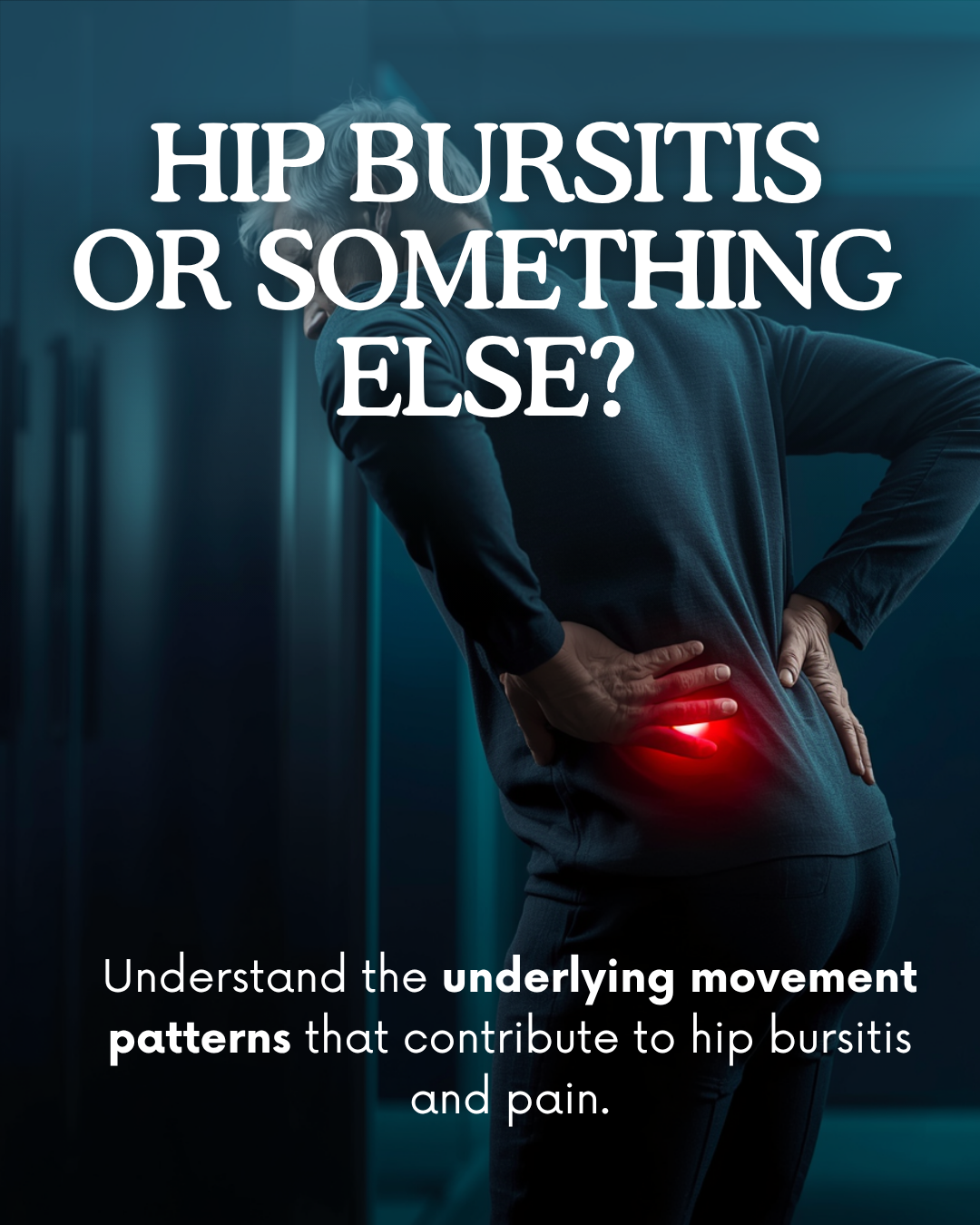
If you've been treating hip bursitis for months and the pain keeps coming back after every cortisone shot and round of stretches, the diagnosis isn't necessarily wrong — it's just incomplete. The bursa is the smoke. The fire is upstream, in how your body moves. At HealthFit in Pasadena, Dr. Jason Han evaluates the three conditions that hide behind the same lateral hip pain — glute medius tendinopathy, hip impingement, and lumbar referral — and traces every one of them back to the movement system that's actually driving the friction. Using an integrated stack of hands-on care, corrective exercise, and regenerative therapy with EMTT, focused shockwave, and radial pressure wave from Day 1, the goal isn't just calming the bursa temporarily. It's fixing the hip drop, the dynamic valgus, and the upstream weakness that started the whole pattern — so the smoke finally clears for good.

Read More

Why Stretching Isn't Fixing Your Tight Hips (And What Will)

Why Stretching Isn't Fixing Your Tight Hips (And What Will)

If you stretch your hips every morning and they're locked up again by lunch, you're treating the symptom — not the cause. Chronic hip tightness is rarely a flexibility problem. It's usually a strength and stability problem: weak glutes that stop firing, a core that can't stabilize the pelvis, and four hip flexors working overtime to compensate. At HealthFit in Pasadena, Dr. Jason Han uses a Source-Cause framework to identify what's actually driving the tightness — whether it's posterior chain weakness, core instability, or real joint degeneration like a labral tear or hip impingement. When tissue damage is part of the picture, regenerative therapy with EMTT, focused shockwave, and radial pressure wave is integrated from Day 1 alongside hands-on care and corrective exercise. You can't out-stretch a weak posterior chain — but you can fix the whole system when you treat the source and the cause together.

Read More

Focused vs. Radial Shockwave: Why One Machine Isn't Enough

Focused vs. Radial Shockwave: Why One Machine Isn't Enough

Most people who say shockwave therapy "didn't work" never learned there are two kinds — and they only got one. Focused shockwave delivers concentrated acoustic energy deep into damaged tissue like arthritic joints, bone stress injuries, and tendon insertions. Radial pressure wave spreads energy across the surface to release the tight muscles, compensating structures, and overloaded soft tissue that caused the injury in the first place. At HealthFit in Pasadena, we use the Storz Medical system with both machines running together from Day 1 — because treating the source without addressing the cause, or vice versa, leaves you with half a recovery. It's part of our Source-Cause-Stack framework: heal the damaged tissue, fix the movement pattern feeding it, and integrate regenerative therapy into the plan from the start — not as a last resort.

Read More

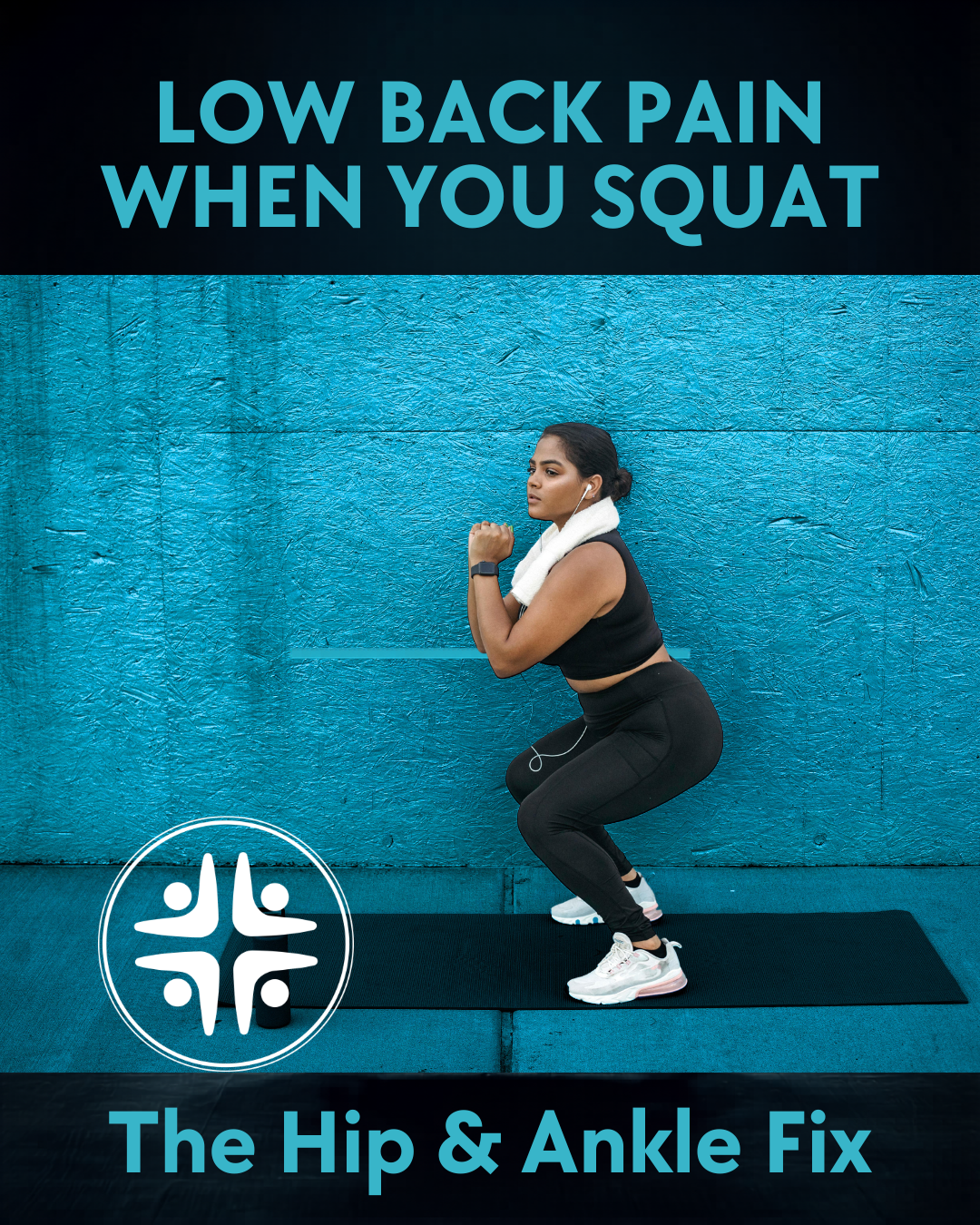
Low Back Pain When You Squat: The Hip and Ankle Fix

Low Back Pain When You Squat: The Hip and Ankle Fix

Your low back hurts when you squat, but the squat isn't the problem — it's a stress test that exposes whatever in your chain isn't doing its job. Stiff hips, limited ankle dorsiflexion, and a locked thoracic spine force the lumbar spine to compensate under load, rep after rep. At HealthFit Physical Therapy & Chiropractic in Pasadena, Dr. Jason Han breaks down the source-versus-cause framework, why the classic "arch and look up" cue actually makes it worse, how asymmetry is one of the biggest hidden drivers of low back pain in lifters, and why split squat regressions are the fastest path back to a pain-free barbell squat. When the tissue itself is part of the story, regenerative therapy runs in parallel from Day 1 — not as a last resort. Here's how to fix the cause, heal the source, and put more weight on the bar.

Read More