The Pickleball Pop: Why Calf Strains and Achilles Tears Are Surging

The Pickleball Pop: Why Calf Strains and Achilles Tears Are Surging

That pop on the pickleball court wasn't bad luck — it was the end of a process that had been building for years. Research shows over 90% of spontaneously ruptured tendons already had pre-existing degenerative changes before they snapped. Pickleball just exposed the structural threshold with hundreds of explosive push-offs per match on tissue that was already wearing down. At HealthFit in Pasadena, Dr. Jason Han treats the pickleball pop at every layer — the degenerated Achilles or calf tissue with EMTT, focused shockwave, and radial pressure wave, and the upstream mechanics that overloaded it in the first place: limited ankle dorsiflexion, restricted hip extension, weak glutes, and poor deceleration patterns. Rest calms the pain. Treating the source and the cause together from Day 1 is what actually keeps the pop from coming back.

Read More

Hamstring Tears Are Spiking in 2026 — Here's Why, and What to Actually Do About It

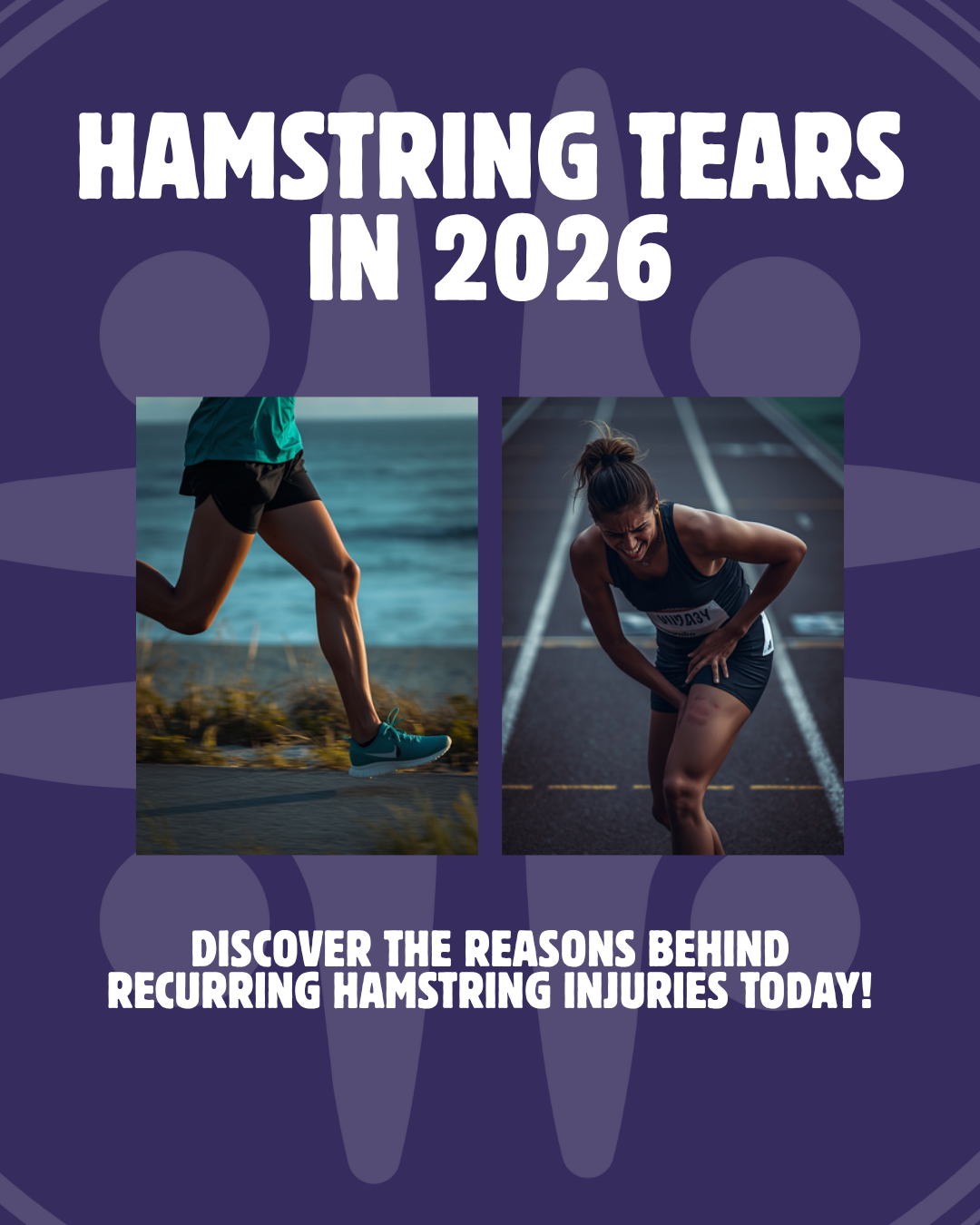
Hamstring Tears Are Spiking in 2026 — Here's Why, and What to Actually Do About It

Hamstring tears are surging in 2026 — from elite sprinters to weekend runners and pickleball players coming back too fast. And nearly one in three come back within a year, often worse than the first. The reason? Most rehab treats the sore spot and stops there. At HealthFit in Pasadena, Dr. Jason Han — former head of rehab for LAFC — uses a pro-sports approach: no waiting, no resting and hoping, and no skipping the kinetic chain. The tear is the source, but the cause is almost always upstream — a stiff lower back, glutes that don't fire, and eccentric strength that ran out. Using the healing stack of hands-on therapy, targeted eccentric loading, and regenerative therapy with EMTT, focused shockwave, and radial pressure wave from Day 1, the goal isn't just stopping the pain. It's rebuilding the chain so the hamstring never gets hung out to dry again.

Read More

Why Pickleball Injuries Are Different — And Why Most Clinics Treat Them Wrong

Why Pickleball Injuries Are Different — And Why Most Clinics Treat Them Wrong

Pickleball-related ER visits have climbed more than tenfold over the last decade, and nearly all of those players are over fifty. The problem isn't the sport — it's a perfect storm of high-load, multidirectional, repetitive movement performed by bodies that weren't trained for it, carrying decades of tissue wear. And most clinics are treating these injuries wrong because they only address the spot that hurts. The elbow pain is really a grip and shoulder blade problem. The calf pop is really an ankle and hip problem. The back pain is really a rotation pattern problem. At HealthFit in Pasadena, every pickleball injury is treated through the Source-Cause-Stack framework — hands-on care, corrective exercise, and regenerative therapy with EMTT and focused shockwave, all deployed together from Day 1. Because treating half the problem is exactly how you end up icing the same injury six months later.

Read More

Rotator Cuff Pain That Won't Quit? Why the Exercises Alone Were Never Going to Heal It

Rotator Cuff Pain That Won't Quit? Why the Exercises Alone Were Never Going to Heal It

If your rotator cuff has been nagging for months through the stretches, the resistance bands, and the rest, the problem isn't effort — it's approach. Exercise builds strength around the problem but doesn't repair the damaged tendon at the center of it. That's the gap that leaves shoulders circling at "almost better" for years. At HealthFit in Pasadena, Dr. Jason Han treats the Source — the degenerated tendon tissue — and the Cause — the stiff mid-back, the poorly tracking shoulder blade, the upstream mechanics overloading the cuff — together from Day 1. A randomized controlled trial of 86 patients with rotator cuff tendinopathy found that combining shockwave with EMTT produced significantly greater pain reduction and better function than shockwave alone. Two tools, working together, outperformed one. That's the case for the integrated stack — and it starts from the first visit, not as a last resort.

Read More

Before You Say Yes to Neck Surgery: The Conservative Pathway Most Patients Aren't Shown

Before You Say Yes to Neck Surgery: The Conservative Pathway Most Patients Aren't Shown

If a surgeon told you the disc in your neck needs to go, make sure you've been shown both paths before you sign. Around 90% of people with cervical radiculopathy — nerve pain running from the neck into the arm — get better without surgery. But "I did PT and it didn't work" and "I did the right PT, fully, for a fair stretch of time" are two completely different sentences. At HealthFit in Pasadena, Dr. Jason Han treats the source — the irritated disc and nerve — and the cause — the stiff thoracic spine, the forward head posture, the shoulder blades that stopped doing their job — together from Day 1, using hands-on care, targeted exercise, and regenerative therapy with focused shockwave and radial pressure wave. Surgery isn't the enemy. Skipping the conservative window when nine out of ten people benefit from it is.

Read More

Pickleball Back Pain: Why Rotation Is Wrecking the Lumbar Spines of Every Player Over Fifty

Pickleball Back Pain: Why Rotation Is Wrecking the Lumbar Spines of Every Player Over Fifty

If your back keeps going out on the pickleball court, the problem isn't your back — it's what your body isn't doing above and below it. Your lumbar spine was built for stability, not rotation. When stiff hips and a locked-up thoracic spine can't rotate, every forehand, backhand, and dink dumps rotational force into the one segment that was never designed for it. At HealthFit in Pasadena, Dr. Jason Han uses the Source-Cause-Stack framework to treat pickleball back pain at every layer — restoring hip rotation, thoracic mobility, and glute function while using EMTT, focused shockwave, and radial pressure wave to heal the facet joints, discs, and paraspinal tissue that years of compensated rotation have broken down. You don't have a back problem. You have a rotation problem. Treat the right one, the right way, from Day 1 — and stay on the court.

Read More

Why Your SI Joint Pain Keeps Coming Back — And How to Finally Stop the Cycle

Why Your SI Joint Pain Keeps Coming Back — And How to Finally Stop the Cycle

If your SI joint keeps flaring on the same side no matter how many massages, adjustments, or cortisone shots you get, the problem isn't the side that hurts — it's the side nobody looked at. Your SI joint sits in the middle of a pelvic ring, and when the opposite hip is tight, the lumbar spine is stuck, or the thoracic spine won't rotate, that ring loads unevenly and the same joint absorbs the force every single time. At HealthFit in Pasadena, Dr. Jason Han assesses the whole ring — both SI joints, both hips, the lumbar and thoracic spine, and even the daily asymmetries like which hip you carry your kid on — then treats the source and cause together from Day 1 with hands-on care, targeted exercise, and regenerative therapy using EMTT, focused shockwave, and radial pressure wave. Stop chasing the side that screams. Start treating the ring that's pulling it.

Read More

Why Your Pain Keeps Coming Back — And How to Actually Heal

Why Your Pain Keeps Coming Back — And How to Actually Heal

If you've tried physical therapy, chiropractic, injections, and stretching and your pain still keeps coming back, you're not broken — you've just been treating the wrong thing. The body works as a chain, and the link that screams is almost never the link that's slacking. Your knee pain is usually a hip and foot problem. Your low back pain is usually a glute, core, and foot problem. Your shoulder pain is usually a shoulder blade and upper back problem. At HealthFit in Pasadena, Dr. Jason Han uses the Source-Cause-Stack framework to find where the chain is actually breaking down, then treats the damaged tissue and the upstream driver together from Day 1 — with hands-on care, targeted exercise, and regenerative therapy including EMTT, focused shockwave, and radial pressure wave. Stop chasing the spot. Start treating the chain.

Read More

Tennis Elbow That Won't Go Away: Why It Isn't Healing (And What Actually Will)

Tennis Elbow That Won't Go Away: Why It Isn't Healing (And What Actually Will)

If your tennis elbow has lasted more than a couple of months and nothing — rest, ice, braces, NSAIDs, or cortisone — has made it go away for good, the problem isn't that you haven't healed yet. It's that nothing you've tried was designed to heal the tissue. Chronic tennis elbow isn't inflammation anymore — it's tendon degeneration, with disorganized collagen and micro-tears that have stacked up faster than your body can repair them. At HealthFit in Pasadena, Dr. Jason Han traces the real cause upstream through your grip mechanics, rotator cuff, thoracic spine, neck, and even your hips, while using EMTT, focused shockwave, and radial pressure wave to address the degenerated tendon and the stressed bone at the attachment site from Day 1. The tendon doesn't need another brace. It needs the right tools, in the right hands, from the start.

Read More

Plantar Fasciitis: Why It Keeps Coming Back (And How to Actually Fix It)

Plantar Fasciitis: Why It Keeps Coming Back (And How to Actually Fix It)

If your plantar fasciitis keeps coming back after rest, stretches, orthotics, and cortisone shots, you're not unlucky — you're undertreated. Chronic plantar fasciitis isn't primarily inflammation anymore. It's tissue degeneration, which means anti-inflammatory strategies are treating the wrong problem. At HealthFit in Pasadena, Dr. Jason Han traces the real cause chain from your heel all the way up to your hip — restricted rear foot mechanics, limited ankle dorsiflexion, reduced big toe mobility, tight calves, and weak glutes all contribute to abnormal load on the plantar fascia. Using the Source-Cause-Stack, HealthFit runs regenerative therapy (EMTT, focused shockwave, and radial pressure wave) alongside hands-on physical therapy from Day 1 — healing the degenerated tissue at the cellular level while fixing the upstream movement patterns that broke it down in the first place.

Read More