There's Now a Drug to Save the Muscle You Lose on Ozempic. The Fix You Already Have Is Cheaper.

There's Now a Drug to Save the Muscle You Lose on Ozempic. The Fix You Already Have Is Cheaper.

Scientists are now developing a second drug just to rescue the muscle people lose on Ozempic — a pill to fix a side effect of another pill. But that compound is years from approval, and your muscle is disappearing now. At HealthFit in Pasadena, Dr. Jason Han offers the fix you already have: baseline VO2 max and InBody testing to see what your weight loss is actually made of, progressive resistance training to send your body the signal to keep the muscle, protein targets built off your lean mass, and re-testing to prove it's working. The future pill is trying to fake what lifting already does for free — and the people who benefit most from it will be the ones already doing the work.

Read More


HBOT Before Surgery: The Four-Week Window Most People Miss

HBOT Before Surgery: The Four-Week Window Most People Miss

Surgery is a controlled injury — and the tissue that heals best is tissue that walks in prepared. Hyperbaric oxygen therapy (HBOT) in the three to four weeks before your procedure can boost tissue oxygenation by up to 1,200 percent, help regulate the inflammatory response, and encourage new blood vessel growth in the areas your surgeon is about to work on. At HealthFit Physical Therapy & Chiropractic in Pasadena, Dr. Jason Han builds individualized pre-surgical optimization plans using multiple chamber pressure levels matched to your procedure, health history, and timeline — because the window to prepare is shorter than you think.

Read More

Sleep and Longevity: Why the #1 Longevity Drug Is Free

Sleep and Longevity: Why the #1 Longevity Drug Is Free

The world's most aggressive longevity spender — with daily blood draws, a team of doctors, and over a hundred interventions — still ranks sleep as his number one lever. At HealthFit Physical Therapy & Chiropractic in Pasadena, Dr. Jason Han explains why sleep is the foundation everything else is built on, how cutting it quietly costs you strength, aerobic capacity, and injury resilience, and what simple steps — tracking your deep sleep, cooling your room, and making one decision — can rebuild the repair window your body depends on.

Read More

When to Schedule Your HBOT Session for Maximum Recovery

When to Schedule Your HBOT Session for Maximum Recovery

If you're doing hyperbaric oxygen therapy and not timing your sessions, you're leaving recovery on the table. At two atmospheres of pressure, a hard chamber can raise tissue oxygen by up to 1,200% — but that signal is only as good as the moment you send it. At HealthFit in Pasadena, Dr. Jason Han gives patients four timing rules: get in the chamber within four hours of hard training to catch the repair window, prep tissue in the two to three weeks before a planned surgery, go in the morning when you need your brain sharp for a big day, and schedule sessions around long flights to land ready instead of wrecked. Same chamber, same oxygen, completely different results — all because of timing. HBOT doesn't heal you on its own. It amplifies whatever your body is already trying to do. The goal is to line up the session with the moment your body is doing the most work.

Read More

Why We Test Patients Who Feel Completely Fine

Why We Test Patients Who Feel Completely Fine

You feel fine. Your labs look fine. But in a study of over 120,000 adults, the least-fit group had five times the risk of dying early compared to the fittest — a bigger mortality gap than smoking, coronary artery disease, or diabetes. And almost none of them felt sick. At HealthFit in Pasadena, Dr. Jason Han tests what he calls the Silent Five: VO2 max, training zones, lean muscle mass, metabolic flexibility, and grip strength. None of them hurt. All of them matter. Every result maps onto your Longevity Blueprint — a precision health plan built from your real data, not a generic template. The patients he worries about most aren't the ones in pain. They're the ones who feel great and never look under the hood. Stop guessing. Test, don't guess.

Read More

Starting Something New This Summer? The World Cup Just Taught You How to Get Hurt

Starting Something New This Summer? The World Cup Just Taught You How to Get Hurt

The injuries piling up at the World Cup aren't random — they follow the same pattern that takes down weekend warriors, new gym-goers, and anyone starting a new activity this summer. Load spikes, not hard work, are the real cause of non-contact injuries. At HealthFit Physical Therapy & Chiropractic in Pasadena, Dr. Jason Han explains why a sudden jump in activity is the single biggest injury risk — and how a smart, individualized plan built around your body and your goal can help you start strong without the setback.

Read More

Pickleball Knee: The Lunge Pattern Your Body Was Never Trained For

Pickleball Knee: The Lunge Pattern Your Body Was Never Trained For

If you've been told you need knee surgery because of pickleball, pause. A New England Journal of Medicine sham-surgery trial showed arthroscopic meniscectomy performed no better than fake surgery for degenerative tears — and 31% of pain-free adults in their fifties already have a meniscus tear on imaging. The tear was likely there long before pickleball. What pickleball exposed was a lunge pattern your body was never trained for — weak hip stabilizers, limited ankle dorsiflexion, poor deceleration mechanics, and a knee absorbing forces it was never designed to handle alone. At HealthFit in Pasadena, Dr. Jason Han treats pickleball knee through the full kinetic chain while using EMTT, focused shockwave, and radial pressure wave to address the degenerated tissue from Day 1. Before you go invasive, let someone look at the whole picture.

Read More

Inside a HealthFit Pickleball Assessment: What Real Treatment Looks Like

Inside a HealthFit Pickleball Assessment: What Real Treatment Looks Like

When most pickleball players walk into a clinic with an injury, they get ten minutes, an imaging order, and a treatment plan based on the scan. At HealthFit in Pasadena, they get a real conversation about their history, a full kinetic chain evaluation from neck to feet, 3D movement analysis that shows exactly where the chain is breaking down, and a tissue-level assessment of what's actually degenerated. The research is clear — 80% of pain-free 50-year-olds have disc degeneration on MRI, 23% have a rotator cuff tear, and 31% have a meniscus tear. Imaging shows what's there. It doesn't show what's causing the pain. HealthFit builds every plan around the Source-Cause-Stack framework — hands-on care, targeted exercise, and regenerative therapy with EMTT, focused shockwave, and radial pressure wave, all deployed in parallel from Day 1. Treat the player. Not just the spot.

Read More

Pickleball Shoulder: The Overhead Smash Injury Nobody Treats Right

Pickleball Shoulder: The Overhead Smash Injury Nobody Treats Right

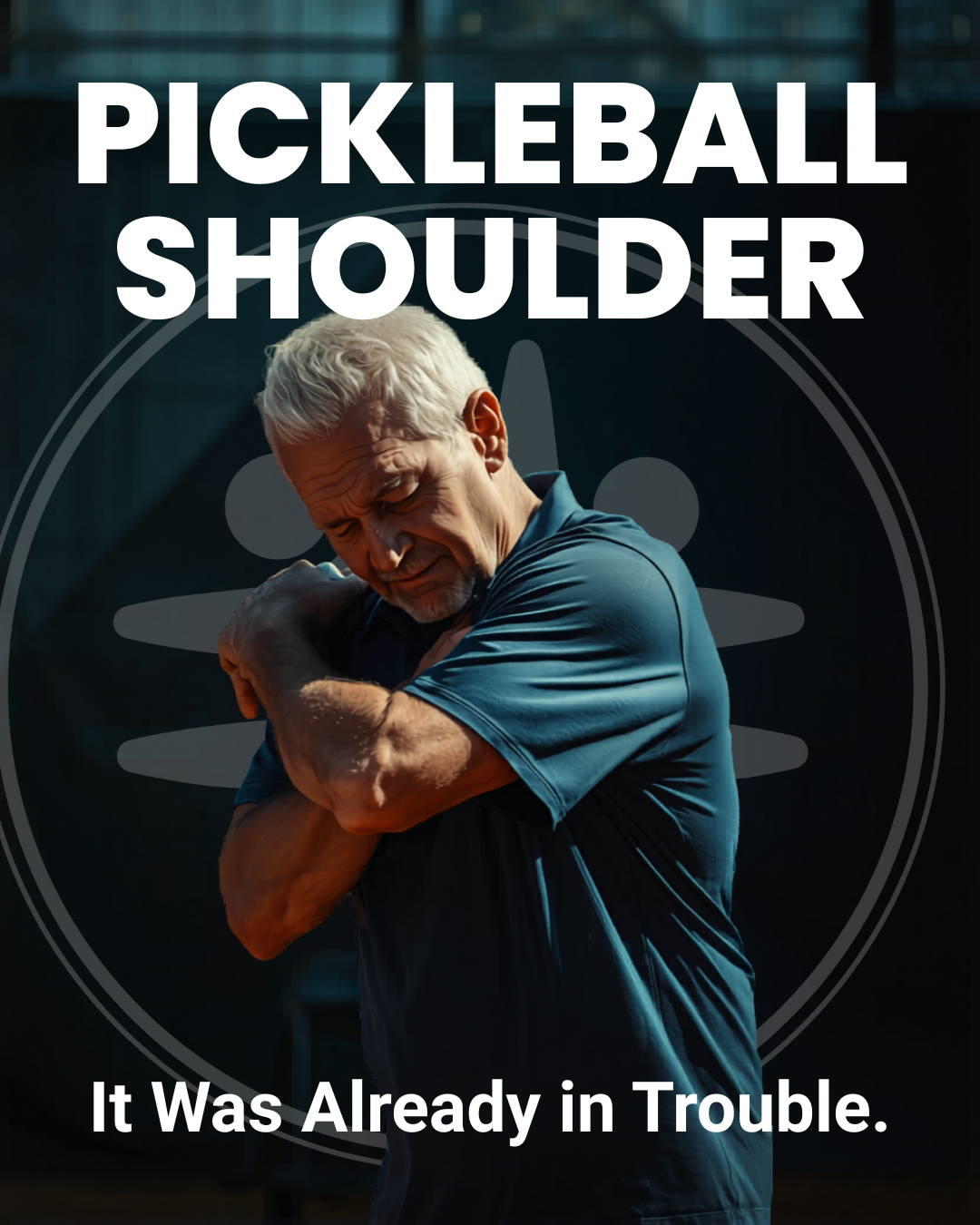
If your shoulder started hurting after a pickleball smash, there's a real chance the rotator cuff was already torn before you ever picked up a paddle. Research shows nearly one in four pain-free adults over fifty has a rotator cuff tear on imaging — pickleball just exposed it. Every overhead smash, serve, and backhand drive loads a shoulder that was already on borrowed time, especially when scapular control has declined, the thoracic spine is stiff from decades of desk work, and the trunk can't transfer force the way it should. At HealthFit in Pasadena, Dr. Jason Han treats pickleball shoulder through the full kinetic chain — shoulder blade mechanics, thoracic mobility, cervical function, core stability, and lower-body power transfer — while using EMTT, focused shockwave, and radial pressure wave to heal the degenerated tendon tissue and even disperse calcific deposits from Day 1. Your shoulder didn't break the day it started hurting. It broke down over years. Treat the tissue and the chain together, from the start.

Read More

The Pickleball Pop: Why Calf Strains and Achilles Tears Are Surging

The Pickleball Pop: Why Calf Strains and Achilles Tears Are Surging

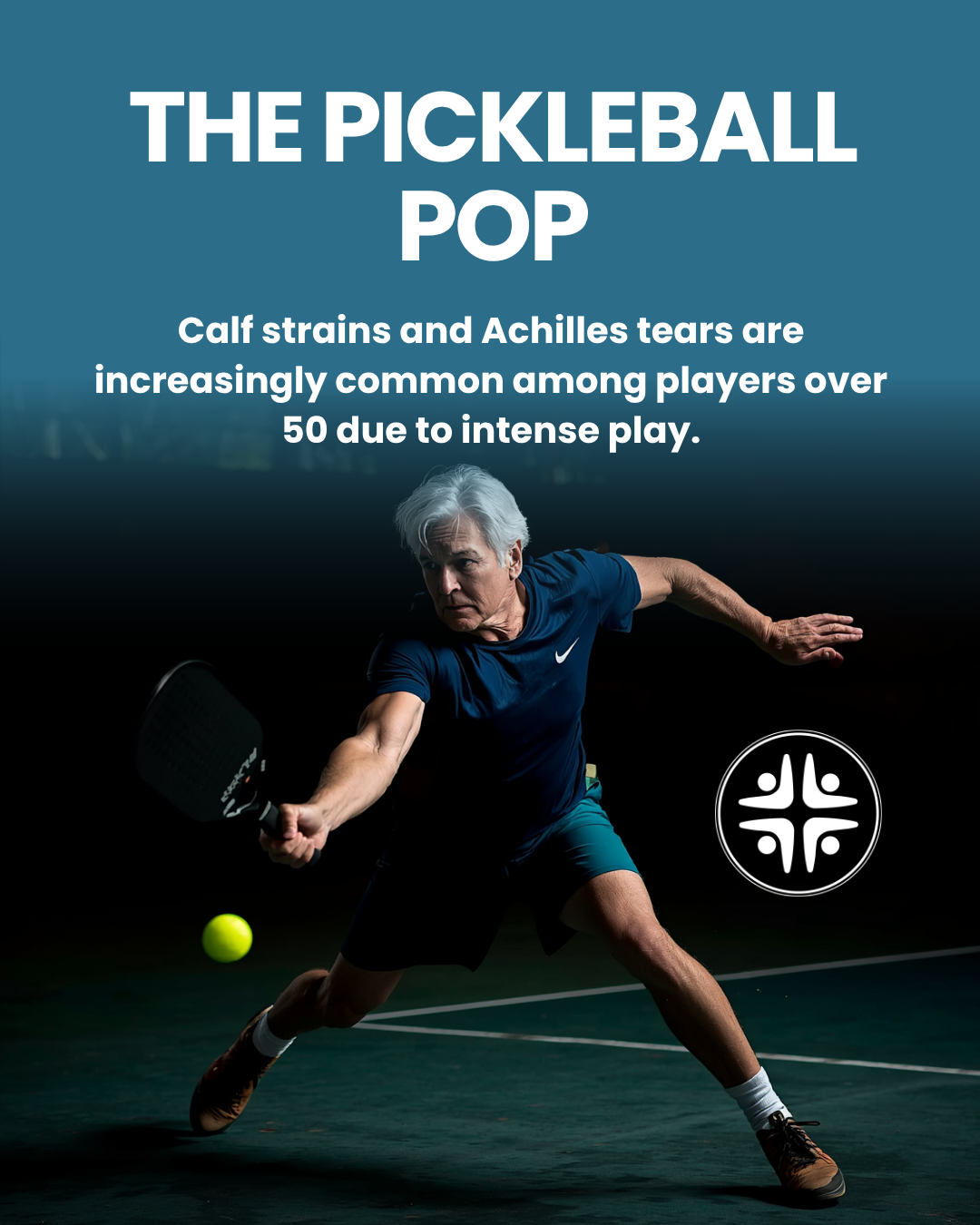
That pop on the pickleball court wasn't bad luck — it was the end of a process that had been building for years. Research shows over 90% of spontaneously ruptured tendons already had pre-existing degenerative changes before they snapped. Pickleball just exposed the structural threshold with hundreds of explosive push-offs per match on tissue that was already wearing down. At HealthFit in Pasadena, Dr. Jason Han treats the pickleball pop at every layer — the degenerated Achilles or calf tissue with EMTT, focused shockwave, and radial pressure wave, and the upstream mechanics that overloaded it in the first place: limited ankle dorsiflexion, restricted hip extension, weak glutes, and poor deceleration patterns. Rest calms the pain. Treating the source and the cause together from Day 1 is what actually keeps the pop from coming back.

Read More