
Shockwave Therapy & EMTT for Bone Density: What the Emerging Research Shows

Shockwave Therapy & EMTT for Bone Density: What the Emerging Research Shows

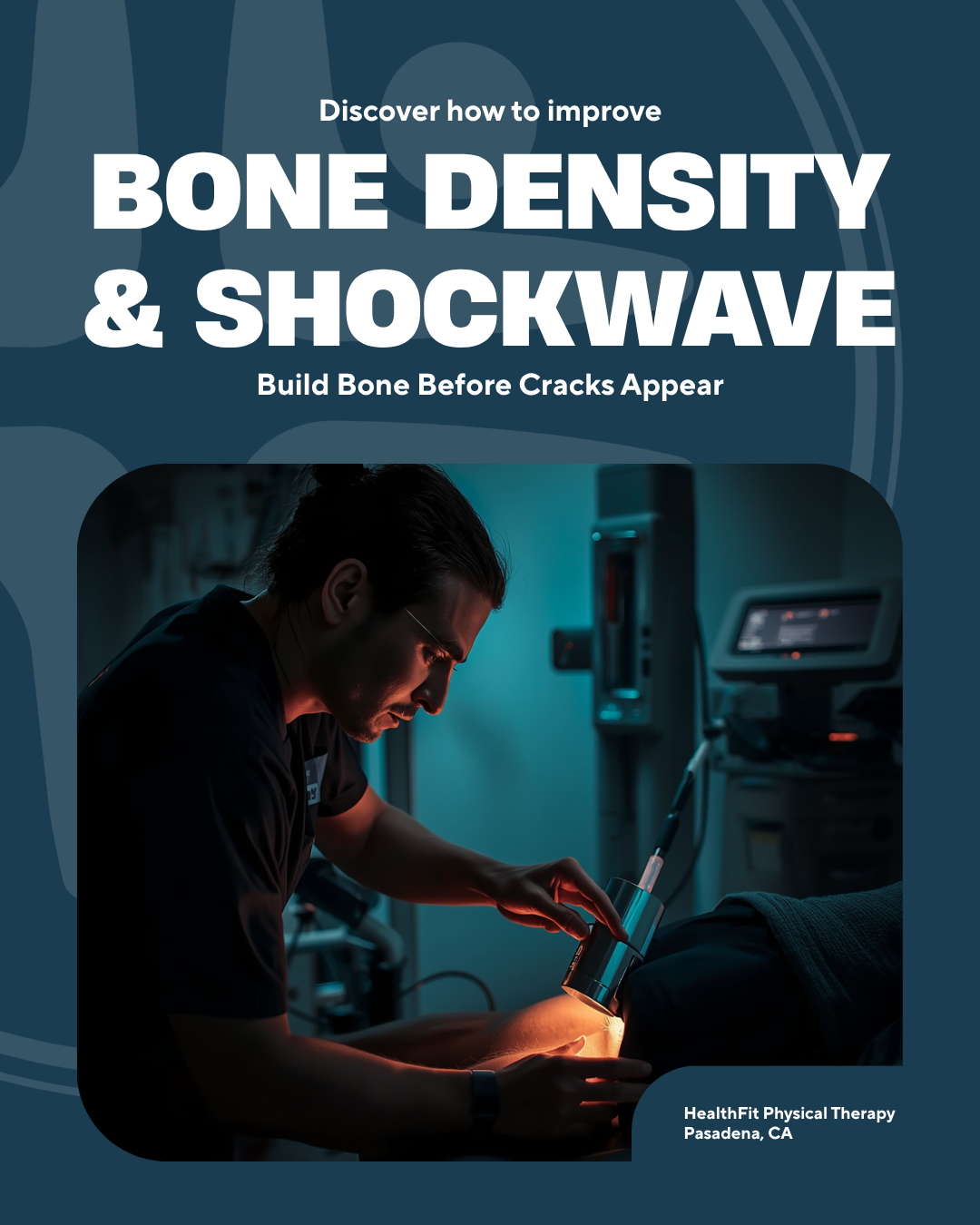
After age 40, most people lose about 1% of bone mass per year — and for postmenopausal women, that jumps to 2–3%. Calcium and vitamin D matter, but they don't address the root problem: dormant bone-building cells that have stopped receiving a strong enough signal to rebuild. Emerging research on focused shockwave therapy shows it can deliver a precise mechanical stimulus that reactivates osteoblasts and improves both bone mineral density and structural strength. When combined with EMTT — which primes the cellular environment and clears damaged cells before shockwave fires the rebuild signal — the regenerative stack targets bone health from two angles at once. Dr. Jason Han at HealthFit Physical Therapy in Pasadena walks through what the science shows, how the tendon-bone connection gets missed, and what a comprehensive bone health approach actually looks like.

Read More
When Cortisone Stops Working: What to Do Next

When Cortisone Stops Working: What to Do Next

The first cortisone shot worked. The second helped less. The third barely did anything. That's not a coincidence — repeat cortisone injections suppress the same inflammatory healing cascade your tissue needs to actually repair. Cortisone quiets the alarm, but it never fixes what's broken. At HealthFit Physical Therapy & Chiropractic in Pasadena, Dr. Jason Han uses what he calls the Regenerative Stack — EMTT to prime the tissue at a cellular level, focused shockwave to drive a precision healing signal into the damaged source, and radial pressure wave to address the surrounding soft tissue system feeding the injury — all while correcting the movement patterns that caused the problem. Here's why cortisone has a ceiling, and what comes next when you've hit it.

Read More

EMTT vs Electrical Stimulation: The Fundamental Difference in How Healing Works

EMTT vs Electrical Stimulation: The Fundamental Difference in How Healing Works

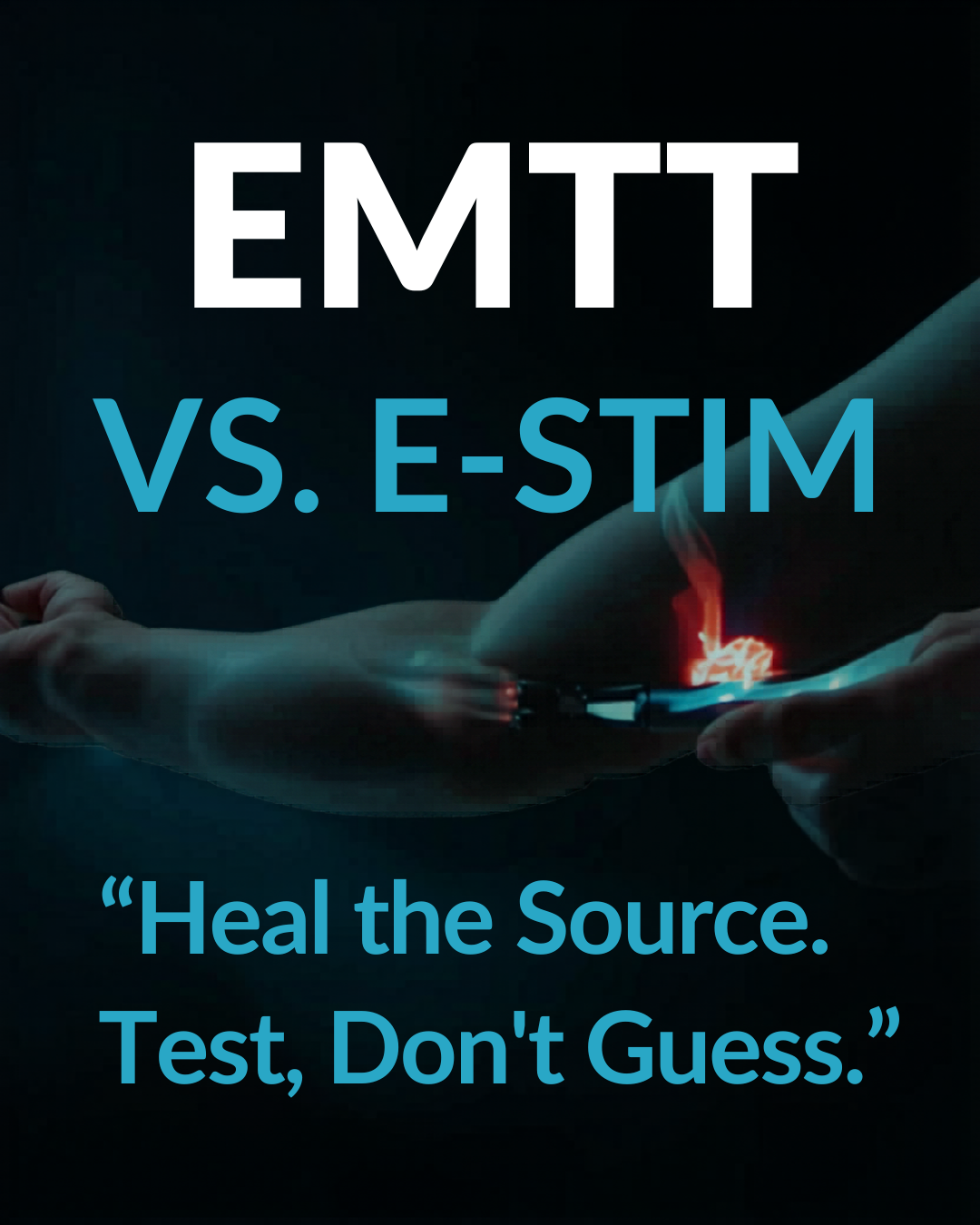
Most people assume EMTT is just a newer version of electrical stimulation. It's not — they're in completely different categories. TENS and EMS send electrical current through surface electrodes to manage pain signals and activate muscles, but the current never reaches your tendons, ligaments, joints, or bone. EMTT uses high-frequency magnetic fields that penetrate deep into tissue at the cellular level — activating dormant repair genes, clearing senescent "zombie cells" that block healing, and triggering new blood vessel formation. One manages how you feel today. The other changes what's happening in your tissue. Here's why that distinction matters for anyone stuck in the chronic injury cycle.

Read More

Best Physical Therapy in Pasadena: One-on-One Care That Actually Heals

Best Physical Therapy in Pasadena: One-on-One Care That Actually Heals

Over 60% of patients who complete a standard physical therapy program still report lingering pain at discharge — not full recovery, just "improved enough." At HealthFit Physical Therapy & Chiropractic in Pasadena, every session is one-on-one with a doctor of physical therapy, 30 to 60 minutes of hands-on care — no techs, no aides, no exercise handouts. Combined with chiropractic, regenerative therapy, hyperbaric oxygen, and metabolic testing all under one roof, HealthFit's integrated ecosystem closes the gap between symptom management and real healing. Here's why our approach gets patients all the way back — not just partway there.

Read More

Shockwave vs. PRP: Why You're Asking the Wrong Question

Shockwave vs. PRP: Why You're Asking the Wrong Question

Shockwave therapy vs. PRP isn't really a choice — it's the wrong question. These two regenerative treatments work through completely different mechanisms, and when sequenced correctly with EMTT, they produce results neither achieves alone. At HealthFit Physical Therapy & Chiropractic in Pasadena, we call it the Regenerative Stack: EMTT resets chronic inflammation at the cellular level, focused shockwave restarts the healing cascade in damaged tissue, and PRP compounds that response over months. But regenerative therapy is only half the equation — without addressing the movement patterns and biomechanical causes that created the injury, no treatment holds long-term. Here's how the full system works and why sequencing matters more than choosing sides.

Read More

Why Most Athletes Never Fully Recover From Jumper’s Knee (And What To Do About It)

Why Most Athletes Never Fully Recover From Jumper’s Knee (And What To Do About It)

Patellar tendinopathy affects nearly 45% of elite volleyball players and 32% of professional basketball players — yet most go through the same frustrating cycle: pain, rest, feel better, return to sport, repeat. The problem isn't effort. It's that most treatment addresses the source of the pain without ever fixing the cause. The tendon hurts, but the real issue is how you load your body — specifically, a knee-dominant movement pattern that puts the patellar tendon under more stress than it's designed to handle alone. Here's the movement pattern driving the cycle, the layers most rehab programs miss, and the 4-phase framework that actually breaks it.

Read More

Achilles Tendinopathy Treatment: Why It Keeps Coming Back (And What Actually Fixes It)

Achilles Tendinopathy Treatment: Why It Keeps Coming Back (And What Actually Fixes It)

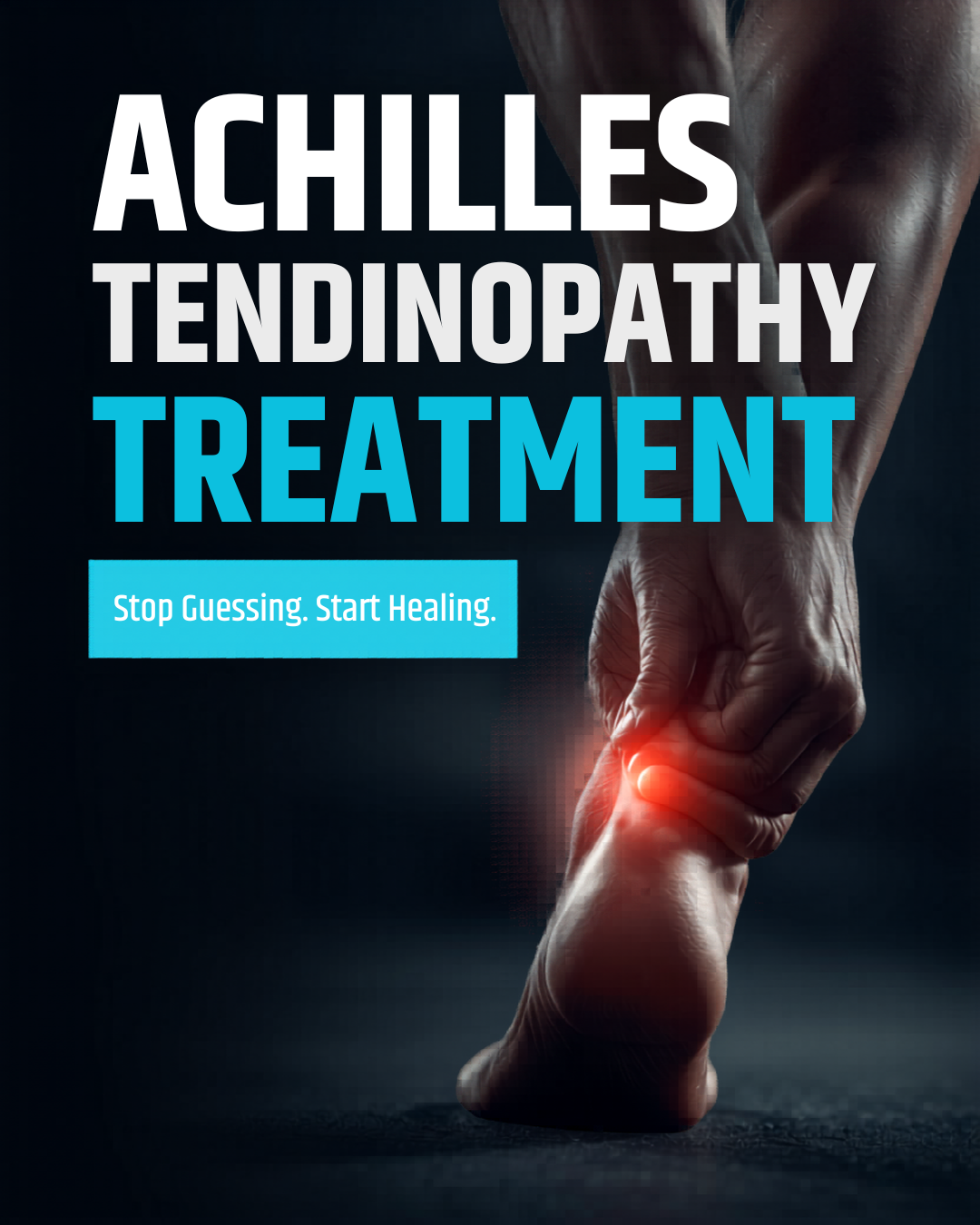
Achilles tendinopathy affects runners, athletes, and active adults — and for most, the frustrating cycle of rest, rehab, and relapse never ends. That's because standard treatment targets the tendon without addressing the real cause: mechanical breakdowns at the big toe, hip, and glutes that overload the Achilles with every step. At HealthFit Physical Therapy & Chiropractic in Pasadena, we close what we call the Source-Cause Gap — combining movement correction, eccentric loading, focused shockwave, and EMTT to not only calm the pain but fix the pattern driving it. Here's what a complete Achilles tendinopathy treatment approach actually looks like.

Read More

HBOT for Recovery and Rehabilitation in Pasadena: Closing the Gap Standard Care Leaves Behind

HBOT for Recovery and Rehabilitation in Pasadena: Closing the Gap Standard Care Leaves Behind

Standard rehab is good at getting you to 80%. HBOT is what closes the gap. Most recovery protocols treat the symptoms of tissue breakdown — pain, stiffness, swelling — but don't address the biological environment in which healing either happens or stalls. Hyperbaric Oxygen Therapy does. By saturating compromised tissue with dissolved oxygen under pressure, HBOT creates the cellular conditions that make physical therapy more effective, post-surgical healing faster, and recovery more complete. Here's how it works — and how HealthFit integrates it in Pasadena.

Read More

Physical Therapy + HBOT for Back Pain in Pasadena: A Smarter Recovery Approach

Physical Therapy + HBOT for Back Pain in Pasadena: A Smarter Recovery Approach

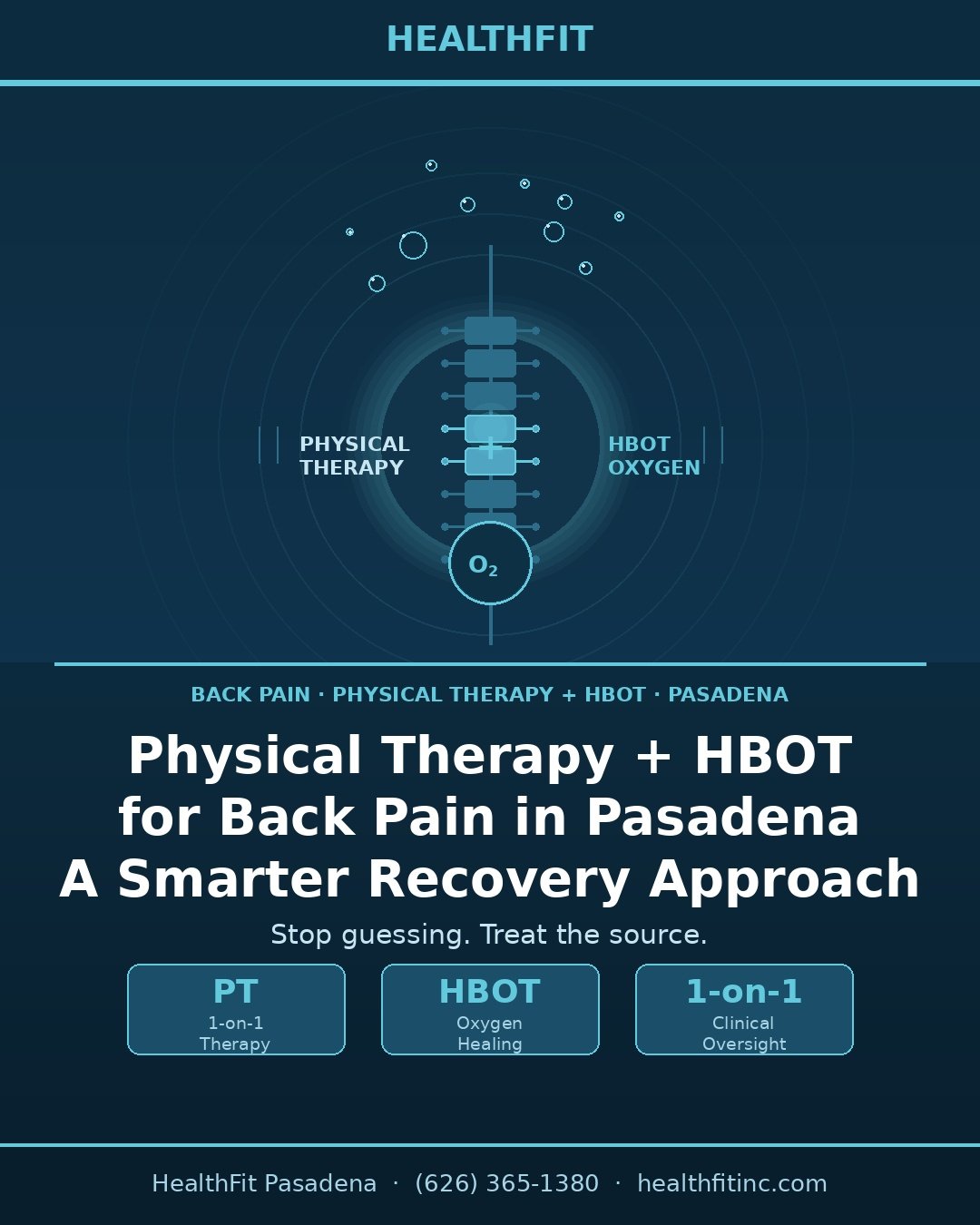
If physical therapy isn't fully resolving your back pain, HBOT may be the missing piece. HealthFit's integrated PT + Hyperbaric Oxygen Therapy protocol addresses both the structural and tissue-level drivers of chronic and acute back pain — all under one roof in Pasadena. Here's how the combination works, and why most back pain patients need more than one approach to fully recover.

Read More

Regenerative Therapy vs Surgery: Why Patients Choose Shockwave & EMTT First

Regenerative Therapy vs Surgery: Why Patients Choose Shockwave & EMTT First

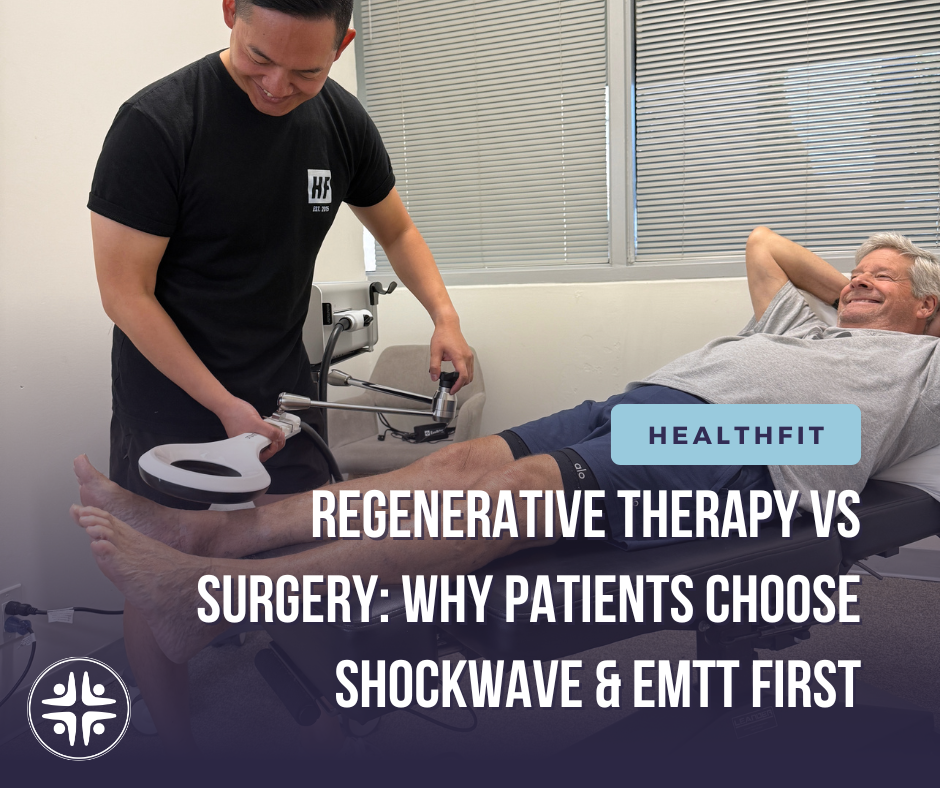
Before rushing into surgery for chronic pain, consider this: studies show up to 40% of certain elective surgeries may be unnecessary, yet many of the 50 million Americans facing this decision feel pressured to choose surgical intervention. Enter Shockwave and EMTT therapy - revolutionary treatments helping 80% of patients avoid surgery altogether. These non-invasive therapies work by stimulating your body's natural healing response, with 91% of patients reporting significant pain reduction within 6-8 sessions and 73% maintaining improvements for over two years. Unlike surgery, which often involves lengthy recovery times and potential complications (affecting 35% of patients), regenerative therapy offers immediate return to daily activities with no downtime. Research shows these treatments can improve tissue healing rates by up to 70% compared to traditional approaches, addressing the root cause of pain rather than just masking symptoms.

Read More