Why Stretching Isn't Fixing Your Tight Hips (And What Will)

Why Stretching Isn't Fixing Your Tight Hips (And What Will)

If you stretch your hips every morning and they're locked up again by lunch, you're treating the symptom — not the cause. Chronic hip tightness is rarely a flexibility problem. It's usually a strength and stability problem: weak glutes that stop firing, a core that can't stabilize the pelvis, and four hip flexors working overtime to compensate. At HealthFit in Pasadena, Dr. Jason Han uses a Source-Cause framework to identify what's actually driving the tightness — whether it's posterior chain weakness, core instability, or real joint degeneration like a labral tear or hip impingement. When tissue damage is part of the picture, regenerative therapy with EMTT, focused shockwave, and radial pressure wave is integrated from Day 1 alongside hands-on care and corrective exercise. You can't out-stretch a weak posterior chain — but you can fix the whole system when you treat the source and the cause together.

Read More
Focused vs. Radial Shockwave: Why One Machine Isn't Enough

Focused vs. Radial Shockwave: Why One Machine Isn't Enough

Most people who say shockwave therapy "didn't work" never learned there are two kinds — and they only got one. Focused shockwave delivers concentrated acoustic energy deep into damaged tissue like arthritic joints, bone stress injuries, and tendon insertions. Radial pressure wave spreads energy across the surface to release the tight muscles, compensating structures, and overloaded soft tissue that caused the injury in the first place. At HealthFit in Pasadena, we use the Storz Medical system with both machines running together from Day 1 — because treating the source without addressing the cause, or vice versa, leaves you with half a recovery. It's part of our Source-Cause-Stack framework: heal the damaged tissue, fix the movement pattern feeding it, and integrate regenerative therapy into the plan from the start — not as a last resort.

Read More

Low Back Pain When You Squat: The Hip and Ankle Fix

Low Back Pain When You Squat: The Hip and Ankle Fix

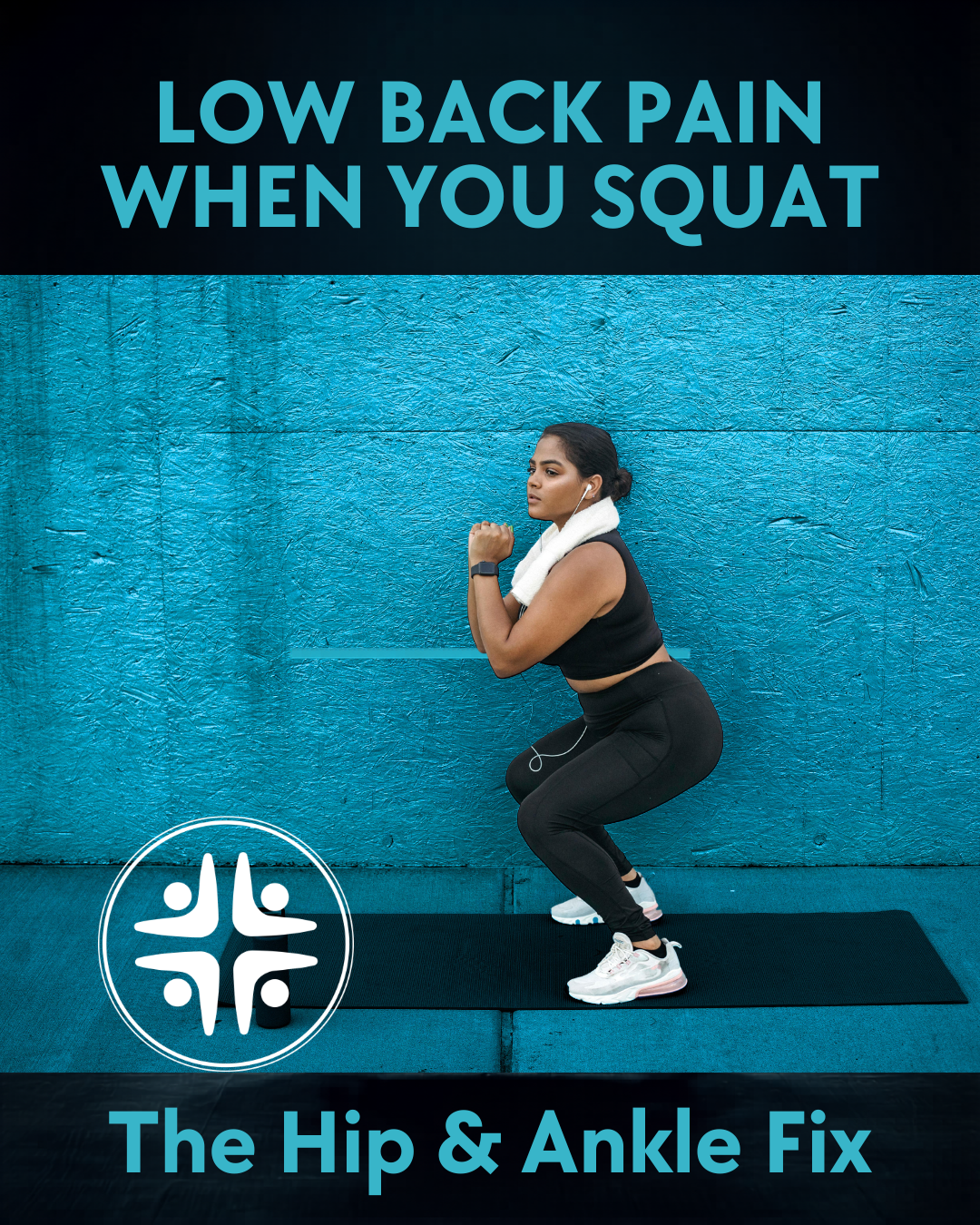
Your low back hurts when you squat, but the squat isn't the problem — it's a stress test that exposes whatever in your chain isn't doing its job. Stiff hips, limited ankle dorsiflexion, and a locked thoracic spine force the lumbar spine to compensate under load, rep after rep. At HealthFit Physical Therapy & Chiropractic in Pasadena, Dr. Jason Han breaks down the source-versus-cause framework, why the classic "arch and look up" cue actually makes it worse, how asymmetry is one of the biggest hidden drivers of low back pain in lifters, and why split squat regressions are the fastest path back to a pain-free barbell squat. When the tissue itself is part of the story, regenerative therapy runs in parallel from Day 1 — not as a last resort. Here's how to fix the cause, heal the source, and put more weight on the bar.

Read More

Why Is My Neck Always Stiff? The Source-Cause Fix Most People Miss

Why Is My Neck Always Stiff? The Source-Cause Fix Most People Miss

If you're rubbing the same spot on your neck every day and the stiffness keeps coming back, you're treating the symptom — not the cause. At HealthFit in Pasadena, Dr. Jason Han uses a Source-Cause framework to trace chronic neck stiffness back to where it actually starts: weak deep neck flexors, a locked-up thoracic spine, rounded shoulder blades, and sometimes even jaw tension or nighttime teeth grinding. When those "spokes" are out of alignment, your neck — the hub — takes all the load. The fix isn't more massage on the back of your neck. It's waking up the stabilizers in front, restoring mobility to your upper back, and when real degeneration is part of the picture, integrating regenerative therapy from Day 1. Source and cause, treated together — so your neck can finally stop doing a job it was never built for.

Read More

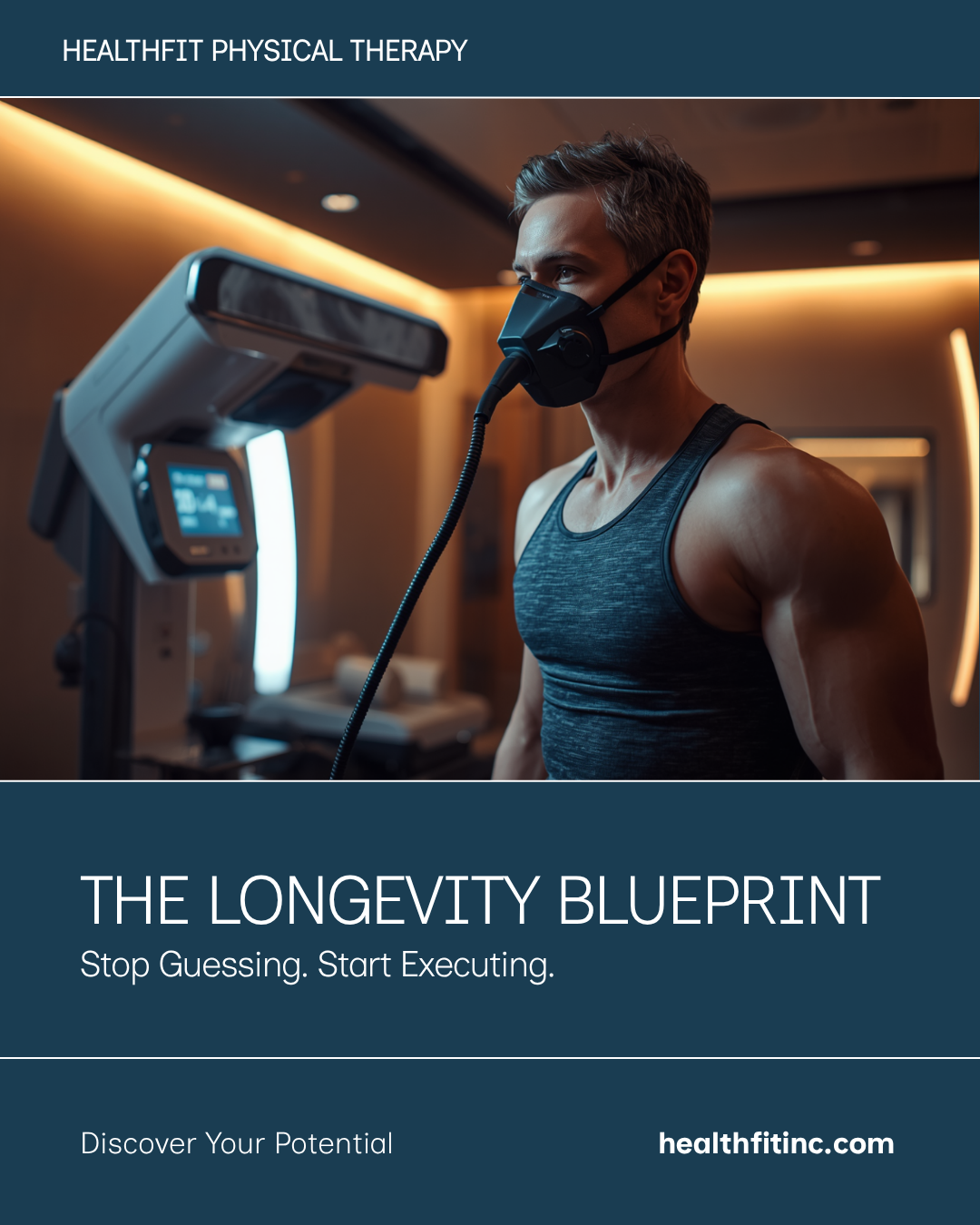
The Longevity Blueprint: A Precision Health System for High Performers After 40

The Longevity Blueprint: A Precision Health System for High Performers After 40

You exercise. You eat clean. You track your sleep. And still, something feels off — the energy dips, the recovery takes longer, the body composition won't move. That's not a willpower problem. It's a data problem. At HealthFit Physical Therapy & Chiropractic in Pasadena, Dr. Jason Han built the Longevity Blueprint — the same precision health system used inside professional sports organizations, now available to high-performing adults 40 to 60 who are done guessing. Clinical-grade VO2 Max testing, metabolic analysis, body composition, strength and power markers, and a one-on-one consult that turns your actual numbers into an actual plan. Here's how it works and who it's built for.

Read More

Inside a Longevity Blueprint: Exactly What Happens in the 6-Test Assessment

Inside a Longevity Blueprint: Exactly What Happens in the 6-Test Assessment

Most people know they should be doing more for their health — but they don't know where to start. The Longevity Blueprint at HealthFit in Pasadena takes the guesswork out of aging well. Through precision testing — including VO₂ max, metabolic analysis, movement screening, and body composition — your care team builds a data-driven roadmap tailored to how your body actually works. It's not a generic wellness plan. It's a system designed to help high-performers, active adults, and anyone serious about longevity train smarter, recover faster, and close the gap between where they are and where they want to be.

Read More

Why Your Knee Still Hurts After Physical Therapy (And What Real Healing Actually Requires)

Why Your Knee Still Hurts After Physical Therapy (And What Real Healing Actually Requires)

Up to one in three patients with chronic knee pain still have meaningful pain a year after standard rehab — not because they didn't try hard enough, but because traditional physical therapy is built to address only half the problem. Strength and mobility work treats the cause — hip mechanics, ankle stability, movement patterns — but it can't regenerate damaged tissue. The tendinopathy, the cartilage degeneration, the structural source of the pain never gets direct care. At HealthFit Physical Therapy & Chiropractic in Pasadena, Dr. Jason Han runs the Source-Cause-Stack framework from Day 1: one-on-one PT to fix the biomechanical cause, layered with EMTT to reset the cellular environment, focused shockwave to drive precision repair at the source, and radial pressure wave to clear the surrounding soft tissue load — all in parallel, not sequentially. Here's why your knee plateaued and what real integrated healing actually looks like.

Read More

How We Treat Tendon Pain at HealthFit: The Integrated Approach

How We Treat Tendon Pain at HealthFit: The Integrated Approach

Most tendon pain cycles back because rehab was only built to treat half of it — the movement patterns upstream, but never the damaged tissue itself. At HealthFit Physical Therapy & Chiropractic in Pasadena, Dr. Jason Han uses what he calls the Source-Cause-Stack framework: hands-on care to diagnose and treat the kinetic chain, targeted exercise to correct the mechanical overload, and regenerative therapy — EMTT to reset the cellular environment followed by focused shockwave on the damaged tendon and radial pressure wave on the surrounding soft tissue — all running in parallel from Day 1, not sequentially after something fails. That single change in sequencing is why patients who plateaued elsewhere finally get unstuck. Here's exactly how the integrated approach works for Achilles, patellar, rotator cuff, and every other tendon injury we treat.

Read More

Shockwave Therapy & EMTT for Bone Density: What the Emerging Research Shows

Shockwave Therapy & EMTT for Bone Density: What the Emerging Research Shows

After age 40, most people lose about 1% of bone mass per year — and for postmenopausal women, that jumps to 2–3%. Calcium and vitamin D matter, but they don't address the root problem: dormant bone-building cells that have stopped receiving a strong enough signal to rebuild. Emerging research on focused shockwave therapy shows it can deliver a precise mechanical stimulus that reactivates osteoblasts and improves both bone mineral density and structural strength. When combined with EMTT — which primes the cellular environment and clears damaged cells before shockwave fires the rebuild signal — the regenerative stack targets bone health from two angles at once. Dr. Jason Han at HealthFit Physical Therapy in Pasadena walks through what the science shows, how the tendon-bone connection gets missed, and what a comprehensive bone health approach actually looks like.

Read More

EMTT vs. PEMF: Why Your Mat Isn't Healing Your Injury

EMTT vs. PEMF: Why Your Mat Isn't Healing Your Injury

PEMF mats and clinical EMTT both use pulsed magnetic fields — but that's where the similarity ends. PEMF operates in the low millitesla range at the surface level, supporting general recovery the way good sleep and hydration do. EMTT pulses up to 3 tesla, penetrating inches deep into tendon, ligament, and bone to re-open ion channels, reset chronic inflammation, and restart the cellular repair process that's been stalled. One is the nudge. The other is the jolt. Dr. Jason Han at HealthFit Physical Therapy in Pasadena breaks down why the intensity gap matters, what EMTT actually does inside your cells, and why the tool only works when it lives inside a complete system that treats both the source and the cause of your injury.

Read More